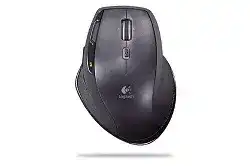
A dead-looking cursor on this model is often not a mouse failure. The Logitech MX1100R Rechargeable Cordless Laser Mouse Driver matters when the computer sees a USB device but the pointer, wheel modes, sensitivity buttons, or application switch do not behave like the MX1100R hardware. This is a 2.4 GHz cordless laser mouse that works through its USB receiver, so the repair path should begin with power, receiver contact, and the older Logitech control software rather than Bluetooth menus.
Start with the parts that affect the radio link. Put the power switch in the on position, connect the receiver directly to a working USB port, and wait a short moment for the operating system to finish loading the device. If the computer is a desktop, a front USB port can sometimes give the receiver a clearer path to the mouse than a port buried behind the case.
When the pointer appears only after several reconnects, avoid changing too many things at once. Use one receiver, one USB port, and one Logitech software package during testing. Reboot after the software installs, then turn the mouse off and on again. This forces the operating system and Logitech utility to refresh the same hardware path instead of holding a stale USB session.
Logitech MX1100R Rechargeable Cordless Laser Windows Driver Download
| Driver Name | Description | Supported OS | File Size | Download |
|---|---|---|---|---|
| SetPoint 64-bit Software | Full SetPoint offline package for configuring mouse button settings, tracking speed, device-specific options, and battery status. | Windows 11, Windows 10 64-bit, Windows 8 64-bit, Windows 7 64-bit | 80.45 MB | |
| SetPoint 32-bit Software | Complete SetPoint offline installer for managing pointer behavior, hot-keys, mouse controls, Caps Lock, and Num Lock alerts. | Windows 11, Windows 10 32-bit, Windows 8 32-bit, Windows 7 32-bit | 78.04 MB | |
| SetPoint Smart Installer | Small SetPoint web installer for mouse customization and device settings, requiring an internet connection during installation. | Windows 11, Windows 10 32-bit/64-bit, Windows 8 32-bit/64-bit, Windows 7 32-bit/64-bit | 4.61 MB | |
| Logitech Connection Utility | Utility for restoring the wireless receiver connection when the mouse is not pairing or responding correctly. | Windows 11, Windows 10 32-bit/64-bit, Windows 8 32-bit/64-bit, Windows 7 32-bit/64-bit | 1.04 MB |
Logitech MX1100R Rechargeable Cordless Laser Mac OS Driver Download
| Driver Name | Description | Supported OS | File Size | Download |
|---|---|---|---|---|
| Logitech Control Center Software | Mac customization software for adjusting mouse buttons, scrolling behavior, pointer controls, and supported Logitech device settings. | macOS 11, macOS 10.15, macOS 10.14, macOS 10.13 | 17.76 MB | |
| Logitech Control Center Software | Logitech Control Center package for Mac OS X systems needing mouse button mapping and device preference management. | Mac OS X 10.13, Mac OS X 10.12, Mac OS X 10.11 | 17.15 MB | |
| Logitech Control Center Software | Older Mac OS X release for setting mouse controls, scroll options, and Logitech hardware preferences on supported systems. | Mac OS X 10.11, Mac OS X 10.10, Mac OS X 10.9, Mac OS X 10.8 | 17.06 MB |
Logitech MX1100R Rechargeable Cordless Laser Mouse Driver When the USB Receiver Stops Responding
A dead-looking cursor on this model is often not a mouse failure. The Logitech MX1100R Rechargeable Cordless Laser Mouse Driver matters when the computer sees a USB device but the pointer, wheel modes, sensitivity buttons, or application switch do not behave like the MX1100R hardware. This is a 2.4 GHz cordless laser mouse that works through its USB receiver, so the repair path should begin with power, receiver contact, and the older Logitech control software rather than Bluetooth menus.
Start with the parts that affect the radio link. Put the power switch in the on position, connect the receiver directly to a working USB port, and wait a short moment for the operating system to finish loading the device. If the computer is a desktop, a front USB port can sometimes give the receiver a clearer path to the mouse than a port buried behind the case.
When the pointer appears only after several reconnects, avoid changing too many things at once. Use one receiver, one USB port, and one Logitech software package during testing. Reboot after the software installs, then turn the mouse off and on again. This forces the operating system and Logitech utility to refresh the same hardware path instead of holding a stale USB session.
Receiver present but the pointer does not move
If the receiver appears connected but the MX1100R stays silent, check the mouse power before reinstalling software. The bottom switch can be nudged off during storage or cleaning. After turning it on, move the mouse on a plain matte surface and watch for any pointer response before opening the control panel.
A metal desk frame, a tower under the table, or a receiver hidden behind other cables can weaken the 2.4 GHz link. Clear the area around the receiver and keep the mouse closer during the first test. Once it responds, you can move the receiver again and find the desk position that keeps the pointer from dropping out.
Replacement receiver or old pairing problem
The MX1100R is a receiver-based cordless mouse, so a lost or swapped receiver can create a different problem from a normal software reinstall. The mouse may need the matching Logitech connection utility for its receiver generation. Do not treat the receiver as a modern multi-device receiver unless the device label and software confirm that match.
When pairing fails, remove extra receiver attempts from the troubleshooting process. Connect only the receiver you want to use, open the Logitech connection tool intended for this mouse family, and follow the power-cycle prompt carefully. Turning the mouse off and on at the requested moment is more useful than repeatedly reinstalling Windows drivers.
MX1100R Software for SetPoint, Mac Control, and Missing Buttons
The Logitech MX1100R Rechargeable Cordless Laser Mouse Driver should be paired with the right legacy Logitech software when the extra controls disappear. Normal operating system mouse support may move the pointer and handle left or right click, but it may not expose the application switch, horizontal scrolling, back and forward buttons, or custom sensitivity behavior.
On Windows, SetPoint is the expected control software for this generation. On Mac systems from the same support era, Logitech Control Center handles the advanced controls. Modern Logitech apps may not list this older business mouse, so installing the newest control app is not always the best fix. Use the software that actually recognizes the MX1100R.
Back, forward, and application switching do nothing
The visible thumb buttons can work differently depending on the operating system and active program. First test back and forward in a browser page that has real browsing history. Then open the Logitech control software and check whether those controls are assigned to browser navigation, keystrokes, or another command.
The hidden thumb application switch needs Logitech software. If it does nothing after a system upgrade, start SetPoint or Logitech Control Center directly and confirm that the device appears there. If the utility opens but shows no MX1100R entry, reconnect the receiver and restart the machine before changing button assignments.
Sensitivity buttons change nothing
The plus and minus buttons on the MX1100R are there for pointer responsiveness. They can toggle between preset sensitivity levels, and the Logitech software can define those levels. If the buttons feel inactive, check the Logitech utility before assuming the laser sensor has failed.
Windows pointer speed can also mask the difference between the two hardware sensitivity levels. Set the operating system pointer speed to a middle value, disable extreme acceleration choices while testing, and then press the sensitivity buttons slowly. This gives you a clearer view of whether the mouse setting or the system setting is causing the odd feel.
Scroll Wheel Mode, Horizontal Scroll, and Middle Click Problems
The MX1100R wheel has more behavior than a simple vertical scroll wheel. It uses a MicroGear wheel, a mode shift button, middle-click action, and side-to-side tilt for horizontal scrolling. That makes wheel complaints more varied: one person may see pages flying too quickly, while another may lose horizontal movement in spreadsheets.
Use the wheel mode shift button before changing software settings. The free-spinning mode is meant for long documents and web pages, while the click-to-click mode gives more control in lists, menus, and slides. A wheel that feels broken may simply be sitting in the wrong mechanical mode for the task.
Scrolling jumps too far or feels too loose
When scrolling races down the page, switch to the precision wheel mode and retest in the same document. Then check the operating system scroll amount. A high line-per-notch value can make even precision scrolling feel aggressive, especially after a system migration or after another mouse profile changed the shared mouse settings.
If the wheel reverses direction, skips, or responds only after extra force, clean around the wheel before blaming the driver. Dust and skin oil can collect beside the wheel and inside the tilt gap. Use a dry soft brush or careful compressed air. Avoid soaking the wheel area, because liquid can leave residue near the switch mechanism.
Horizontal scrolling is missing
Horizontal scrolling depends on the tilt wheel and Logitech software. Test it in a wide spreadsheet, a large image, or a document wider than the window. Many web pages do not show horizontal movement, so they make a poor test target.
If tilt does not work in a proper test file, open SetPoint or Logitech Control Center and check the wheel assignment. Some applications intercept wheel commands, and some older Logitech profiles send horizontal scroll differently. Assign the wheel tilt to standard horizontal movement first, then test custom actions later.
Middle click opens the wrong action
The scroll wheel also acts as a middle button, but the nearby mode shift button can confuse troubleshooting. Pressing the wheel straight down should produce the middle-click action. Pressing the separate wheel mode button changes the wheel between free-spin and ratcheted scrolling.
If middle click opens application switching, zoom, or another command, the Logitech software likely has a custom assignment loaded. Restore the wheel click to middle button behavior and test it in a browser tab or another program that accepts middle-click commands.
Charging, Battery Type, and Wake Failures
Charging issues on the MX1100R deserve careful wording because this mouse uses rechargeable NiMH AA R6 batteries. It is not a disposable alkaline-battery design. The battery indicator blinks red when charging is needed, blinks green during charging, and turns solid green when the charge completes.
The mouse can keep working while connected to the USB power cable. A full charge takes several hours, while a short charge can provide enough time for quick use. If the pointer dies again soon after charging, inspect the battery type and contact condition before assuming the receiver has failed.
Red light returns soon after charging
A fast return to the red battery light usually points to old cells, weak contact, or the wrong battery type. Use only NiMH AA R6 replacement batteries with the proper rating for this mouse. Do not put alkaline batteries in the MX1100R, because the charging circuit expects rechargeable NiMH cells.
Open the battery compartment and check for dull or dirty contacts. Wipe the contact points gently with a dry cloth and make sure the batteries sit firmly. If the mouse has been stored for years, the original rechargeable cells may no longer hold a useful charge even if the indicator changes color.
Mouse wakes slowly after sitting idle
A short delay after sleep can be normal for an older cordless mouse, but repeated wake failures are not. Turn the mouse off, wait a few seconds, and turn it back on. Then move it near the receiver and watch whether the pointer returns without reconnecting the USB receiver.
If it wakes only while charging, the battery pack is the main suspect. If it wakes only when the receiver is moved, the wireless path is the better suspect. Separating those two tests saves time because charging problems and reception problems can look almost identical at the cursor.
Laser Tracking and Desk Surface Fixes
The MX1100R uses a laser engine, but that does not mean every surface gives a clean reading. Deep, glossy, glassy, patterned, or very dark surfaces can still make the pointer slow down, tremble, or drift. Try a plain mouse pad or a light matte surface before editing driver files or changing advanced system settings.
If the pointer is accurate in one area of the desk but rough in another, the Logitech software is not the main problem. Clean the sensor opening gently and check the mouse feet. Worn or uneven feet can tilt the sensor height, which changes how the laser reads the surface during small movements.
Pointer speed feels wrong after software setup
The Logitech MX1100R Rechargeable Cordless Laser Mouse Driver can expose sensitivity controls, but the final feel still depends on both the mouse and the operating system. Keep system pointer speed near the middle while setting the MX1100R sensitivity levels. After that, adjust one layer at a time.
For detailed work, use the lower sensitivity level and precision scroll mode. For large displays, raise the sensitivity with the mouse button and then fine-tune in SetPoint or Logitech Control Center. This avoids the exaggerated movement that happens when both the operating system and mouse profile are set too high.
Make the Receiver, Wheel, and Battery Tell the Same Story
The best result with this older rechargeable Logitech model comes from reading the symptoms in order. A red battery light points to charging or NiMH cell condition. A missing MX1100R entry in Logitech software points to receiver detection or software mismatch. A wheel that scrolls too quickly may only need the hardware mode button.
Use the Logitech MX1100R Rechargeable Cordless Laser Mouse Driver as part of that diagnosis, not as the only repair. Install the matching Logitech control software, confirm the USB receiver path, charge with the proper NiMH batteries, and test the wheel and buttons in programs that actually use those controls. That gives the MX1100R the best chance of working as its full-featured cordless laser mouse, not just as a plain pointer.