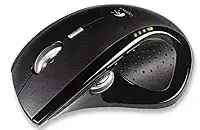
A dead charging cradle, a wheel that will not change modes, or thumb controls that disappear after a system update can make the Logitech MX Revolution Mouse Driver the right place to start. This mouse is an older 2.4 GHz cordless laser model with a rechargeable battery, a USB receiver, a charging dock, SmartShift scrolling, a thumb wheel, and several programmable controls.
The MX Revolution does not follow the same setup path as newer MX Master models. It does not use Bluetooth, Logi Bolt, or a Unifying receiver. The useful download path usually means SetPoint on Windows or Logitech Control Center on older Mac systems, because those tools understand the special controls from this mouse generation.
Basic pointer movement can work before the extra controls work. That is why many users think the mouse has a partial failure. The computer may see enough of the USB receiver for left click and movement, while the search button, thumb wheel, application switch, wheel mode, and custom actions still need Logitech’s older control software.
Logitech MX Revolution Windows Driver Download
| Driver Name | Description | Supported OS | File Size | Download |
|---|---|---|---|---|
| SetPoint 64-bit Software | Full offline SetPoint package for 64-bit Windows with mouse button settings, tracking speed, hot-key options, and device-specific controls. | Windows 11, Windows 10 64-bit, Windows 8 64-bit, Windows 7 64-bit | 80.45 MB | |
| SetPoint 32-bit Software | Complete offline SetPoint installer for 32-bit Windows systems with battery status, button customization, and keyboard indicator support. | Windows 11, Windows 10 32-bit, Windows 8 32-bit, Windows 7 32-bit | 78.04 MB | |
| SetPoint Smart Installer | Small SetPoint web installer for mouse settings and device options that requires an internet connection during installation. | Windows 11, Windows 10 32-bit/64-bit, Windows 8 32-bit/64-bit, Windows 7 32-bit/64-bit | 4.61 MB | |
| Logitech Connection Utility | Utility tool for restoring the receiver connection when the MX Revolution mouse is not detected correctly in Windows. | Windows 11, Windows 10 32-bit/64-bit, Windows 8 32-bit/64-bit, Windows 7 32-bit/64-bit | 1.04 MB |
Logitech MX Revolution Mac OS Driver Download
| Driver Name | Description | Supported OS | File Size | Download |
|---|---|---|---|---|
| Logitech Control Center | Mac software for configuring MX Revolution button actions, scrolling behavior, pointer settings, and device-specific control features. | macOS 11.0, macOS 10.15, macOS 10.14, macOS 10.13 | 17.76 MB | |
| Logitech Control Center | Control Center package for supported Mac OS X versions with mouse customization, scrolling adjustments, and application-specific settings. | Mac OS X 10.13, Mac OS X 10.12, Mac OS X 10.11 | 17.15 MB | |
| Logitech Control Center | Older Mac Control Center release for managing mouse buttons, pointer response, and device behavior on earlier OS X systems. | Mac OS X 10.11, Mac OS X 10.10, Mac OS X 10.9, Mac OS X 10.8 | 17.06 MB |
Start With the Charging Dock Before Blaming the Software
The MX Revolution has one problem that separates it from many Logitech mice: the charging dock. When the mouse refuses to charge, loses power quickly, or flashes a warning after sitting on the cradle, driver changes will not fix the first layer of the issue. Power has to look stable before software troubleshooting makes sense.
The mouse sits on the cradle but does not charge
Clean the metal contacts on the underside of the mouse and on the charging dock before opening anything or replacing parts. Skin oil and fine dust can stop the dock from making firm contact. Use a dry cloth first. If residue remains, use a small amount of isopropyl alcohol on a cloth and let the contacts dry fully.
Seat the mouse carefully in the dock and watch whether the battery indicator reacts. A short flash followed by no charging often means the cradle contacts are still not meeting the mouse contacts cleanly. Reposition the mouse once, then leave it long enough to see whether charging continues instead of lifting it repeatedly.
The battery drains too fast after a full charge
A weak rechargeable pack can act normal for a few minutes and then fall quickly. If the MX Revolution charges, wakes, and then fades during normal use, the internal battery may no longer hold capacity well. The software can show status, but it cannot restore an old lithium-ion cell.
Use the power switch when storing the mouse overnight, especially if you already see shorter run time. If the runtime drops sharply even after contact cleaning and a complete charge, treat the battery as a wear item. Avoid unsafe battery repairs unless you already know how to handle small electronics.
The cradle works only when the mouse is angled
Angled charging usually points to contact pressure, dock wear, or dirt around the seating area. Check that the cradle sits flat and that nothing blocks the mouse from dropping into place. A small obstruction can lift one side enough to break the charging contact.
Do not press the mouse hard into the dock as a long-term fix. That may work for one charge, but it can bend contacts or stress the cradle. Clean first, check the seating position, and then decide whether the cradle itself has worn out.
SmartShift and the MicroGear Wheel Need the Right Control Layer
The scroll wheel is the part many people remember most. The MX Revolution uses a MicroGear wheel with SmartShift behavior, so it can move between a ratcheted feel and a free-spinning mode. When that behavior breaks, the cause may be the physical wheel, the software profile, or the program receiving the scroll command.
The wheel stays in free-spin mode
If the wheel refuses to return to a stepped feel, check the wheel mode settings inside the Logitech software before changing Windows scroll speed. SmartShift can change wheel behavior depending on the application, so the mouse may feel different in a browser, a document, and a long spreadsheet.
Install the Logitech MX Revolution Mouse Driver package that matches this older model generation, then restart and test the wheel again. If the software sees the mouse correctly, adjust the SmartShift behavior and test with one document first. Do not judge the setting only from a web page with custom scrolling.
Scrolling jumps, reverses, or stops for a moment
Dust around the wheel can make a good mouse feel broken. Turn off the mouse and clean around the wheel opening with gentle air and a dry cloth. Spin the wheel several times while the mouse has no power, then test again in a plain document or settings window.
If the direction feels wrong on Mac, check the system scroll direction as well as the Logitech panel. System settings can override what you expect from the mouse software. On Windows, reduce the number of lines per wheel movement only after you confirm the wheel mode itself behaves normally.
The thumb wheel does not scroll sideways
The thumb wheel depends heavily on application support. A spreadsheet may react, while a browser or image editor may ignore the same movement. Test it in more than one program before changing assignments. If the Logitech panel offers a horizontal scroll or zoom option, apply one change and test again.
When the thumb wheel stops after a software cleanup, reinstall the older Logitech control tool rather than a newer app meant for modern MX devices. The MX Revolution’s controls came from a different software era, and the wrong app may leave the thumb wheel hidden.
Buttons Work Only After SetPoint or Logitech Control Center Recognizes the Mouse
Button failures on this model often look random because the left and right buttons continue to work. The search button, thumb controls, application switch actions, and wheel assignments need the Logitech control layer. Without it, the mouse can feel half installed.
Search button does nothing
The search control may need a fresh assignment because browser search behavior has changed since this mouse was current. Open the Logitech software, find the search button entry, and map it to a search command or keyboard shortcut that your current browser accepts. Then test with highlighted text.
If the button still does nothing, check whether the Logitech panel identifies the MX Revolution by name or by a proper compatible profile. A generic mouse entry means the software did not attach the special controls. Reconnect the receiver, restart, and open the control panel again.
Application switch or document flip controls are missing
Older Logitech productivity buttons often depend on background services. When those services fail to load, the mouse keeps moving but special commands vanish. Reinstall the Logitech MX Revolution Mouse Driver software, restart the computer, and test the application switch button before changing every button assignment.
On Mac systems, Logitech Control Center settings may need access through the system preferences area used by older versions. Newer macOS releases can limit older control panels, so check whether the Logitech panel opens at all before assuming the button hardware has failed.
Custom button actions disappear after updates
System updates can replace driver entries or disable older helper components. Keep the repair simple: remove conflicting Logitech mouse utilities, install the proper older control software for this model, restart, and then rebuild only the button actions you actually use.
Avoid running several Logitech control apps for different generations at the same time unless you know which device each one controls. Overlap can create odd results, such as the mouse appearing in one place while its programmable actions fail in another.
Receiver and Tracking Problems That Masquerade as Driver Trouble
The MX Revolution uses a USB receiver, so connection quality still matters even when the software is correct. The receiver link, desk position, sensor surface, and power state can all create symptoms that look like a broken driver. Check those parts when movement fails before the buttons fail.
The pointer pauses after the computer wakes
After sleep, unplug the USB receiver and reconnect it once Windows or macOS has fully returned. This refreshes the receiver path without removing the mouse software. If the pause disappears, the problem likely came from USB wake behavior rather than the Logitech control panel.
Try another direct USB port if wake problems continue. Docks and crowded hubs can delay older cordless receivers during resume. A stable receiver position matters more than a fast port for this kind of mouse.
Pointer movement feels uneven on shiny surfaces
The laser sensor handles many desks, but it can still struggle on glass, mirrors, and glossy patterns. Move the mouse to a plain matte surface and clean the sensor window with a dry lint-free cloth. Do this before changing acceleration or pointer speed.
If the pointer improves on a different surface, keep the driver installation as it is. The mouse was reading the surface poorly. If the pointer remains uneven everywhere, check charge level, receiver placement, and possible USB interference near the receiver.
The receiver works, then disconnects briefly
Short dropouts can come from receiver position or power saving. Put the receiver in a port with a clear path to the mouse and avoid hiding it behind a metal desktop case. If you use a hub, test without it long enough to compare behavior.
Check USB power management if the dropout happens after idle time. The computer may reduce power to the receiver while the mouse sleeps. A port change often fixes this faster than reinstalling the Logitech package again.
Use the MX Revolution Download for the Features That Still Matter
The Logitech MX Revolution Mouse Driver should serve the parts that make this model different: SmartShift scrolling, the thumb wheel, search control, application commands, and the older rechargeable cordless system. If only basic movement fails, work on power, receiver placement, surface tracking, and the charging dock first.
If movement works but the extra controls do not, focus on SetPoint or Logitech Control Center rather than newer software built around recent MX hardware. This mouse came before today’s receiver families and modern Options-style workflows, so the newest Logitech app is not automatically the best match.
A careful repair order keeps the MX Revolution usable for longer. Clean the dock contacts, confirm the receiver link, test the wheel mode, then rebuild button assignments. That sequence fits this mouse better than a generic reinstall loop, because its strongest problems usually come from the charging base, the old control software, and the special wheel system working together.