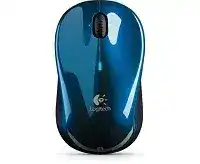
The laptop may accept the Bluetooth pairing and still leave the pointer frozen after a restart, sleep cycle, or battery swap. The Logitech V470 Cordless Laser Mouse Driver is most useful when the Bluetooth connection exists, but the mouse does not wake cleanly or the wheel features do not behave like the original Logitech setup.
This model is a Bluetooth cordless laser notebook mouse, not a USB receiver mouse. It uses two AA batteries, a bottom connect button, a power switch, a battery indicator, and side-to-side scrolling with zoom support through the proper Logitech control layer. That means the best repair path begins with Bluetooth cleanup, not receiver pairing.
Many computers can run the V470 as a standard Bluetooth pointing device. That basic connection may cover left click, right click, and pointer movement, but it may not restore the full wheel behavior or older Logitech controls. Driver and software work should come after the Bluetooth profile looks stable enough to test.
Logitech V470 Cordless Laser Mouse Windows Driver Download
| Driver Name | Description | Supported OS | File Size | Download |
|---|---|---|---|---|
| SetPoint Software 64-bit | Full SetPoint package for offline setup with mouse button settings, tracking speed, hot-keys, battery status, Caps Lock, and Num Lock options. | Windows 11, Windows 10 64-bit, Windows 8 64-bit, Windows 7 64-bit | 80.45 MB | |
| SetPoint Software 32-bit | Complete 32-bit SetPoint installer for offline installation with device-specific mouse controls, pointer adjustment, and keyboard status notifications. | Windows 11, Windows 10 32-bit, Windows 8 32-bit, Windows 7 32-bit | 78.04 MB | |
| SetPoint Smart Installer | Small SetPoint installer for mouse customization and device settings that requires an internet connection during installation. | Windows 11, Windows 10 32-bit/64-bit, Windows 8 32-bit/64-bit, Windows 7 32-bit/64-bit | 4.61 MB |
Logitech V470 Cordless Laser Mouse Mac OS Driver Download
| Driver Name | Description | Supported OS | File Size | Download |
|---|---|---|---|---|
| Logitech Control Center Software | Mac customization software for configuring mouse buttons, scrolling behavior, pointer controls, shortcuts, and device-specific settings. | macOS 11, macOS 10.15, macOS 10.14, macOS 10.13 | 17.76 MB | |
| Logitech Control Center Software | Control Center package for Mac OS X systems with button assignment, pointer control, scrolling setup, and supported Logitech device preferences. | Mac OS X 10.13, Mac OS X 10.12, Mac OS X 10.11 | 17.15 MB | |
| Logitech Control Center Software | Older Mac OS X release for adjusting mouse behavior, button functions, movement settings, and Logitech device configuration on compatible systems. | Mac OS X 10.11, Mac OS X 10.10, Mac OS X 10.9, Mac OS X 10.8 | 17.06 MB |
Rebuild the Bluetooth Link Before Changing Software
The V470 often looks faulty when the computer is really trying to reuse an old Bluetooth profile. Remove the mouse from the Bluetooth list first, switch the mouse off, wait briefly, and then start a new discovery session. A fresh pairing gives the computer a new chance to identify the device without fighting a stale entry.
Pair from the computer, not from a receiver tool
Turn the mouse on and press the connect button on the underside to place it into discovery mode. Then use the computer’s Bluetooth setup screen to add the device. Do not open Unifying, Bolt, or receiver utilities for this model because the V470 connects directly through Bluetooth.
During Logitech V470 Cordless Laser Mouse Driver setup, keep the mouse close to the notebook and avoid pairing several Bluetooth devices at the same time. Headphones, keyboards, and older mice can compete for attention during discovery. Finish the V470 connection first, then check the other devices later.
Delete duplicate V470 entries
One old entry can block a new one. If the Bluetooth screen shows more than one V470-style mouse entry, remove every version and restart the pairing process from the mouse’s connect button. The computer should see one active device, not a history of failed attempts.
When pairing completes but the pointer does not move, turn the V470 off and on once instead of pairing again immediately. A quick power cycle often wakes the new profile. If the mouse still refuses to move, remove the entry and repeat the pairing with new batteries installed.
Update the laptop Bluetooth stack when discovery fails
If the computer cannot find the mouse at all, the Bluetooth adapter deserves attention before Logitech software. Restart Bluetooth, check the laptop’s wireless switch if it has one, and update the notebook Bluetooth driver where needed. The V470 cannot pair through software if the computer’s radio never enters a usable discovery state.
Older Windows laptops may use a vendor Bluetooth manager instead of the plain Windows panel. Use the tool that actually controls the built-in Bluetooth hardware. If one Bluetooth window never finds the mouse, close it and try the other manager before assuming the V470 has failed.
Wheel Features and Zoom Need the Right Control Layer
The wheel can scroll normally while the extra wheel behavior stays missing. That usually means the computer loaded a plain Bluetooth mouse profile, not the Logitech feature layer. The V470 has side-to-side scrolling plus zoom support, so wheel testing should include an app that can respond to horizontal movement or zoom assignments.
Check vertical scrolling first
Open a long document and test vertical scroll before testing any special function. If normal scrolling fails, repair the Bluetooth connection or battery power first. If vertical scrolling works but side-to-side movement does not, the wheel mechanism may be fine and the control software may simply lack the right assignment.
Some programs ignore horizontal wheel input. Test in a wide spreadsheet, an oversized image, or another window with real left-to-right content. A narrow web page can make the tilt action seem broken even when the mouse sends the signal.
Avoid stacking new Logitech apps over old software
The Logitech V470 Cordless Laser Mouse Driver belongs to an older Bluetooth mouse generation. Installing several modern Logitech apps will not automatically make the V470 more visible. If one control program does not recognize it, remove extra Logitech mouse software, restart, and test the Bluetooth profile again before installing the older package that matches the device.
This approach prevents two control layers from trying to manage the same Bluetooth mouse. It also makes troubleshooting clearer. If the pointer works before the software and becomes jumpy after installation, the software profile needs removal or reset rather than another download.
Zoom or side scrolling changed after setup
If the wheel suddenly zooms when you expected horizontal scroll, open the Logitech mouse control panel where available and review the wheel assignment. The V470’s wheel feature can serve different actions depending on software settings. Restore the default action if the wheel behavior changed during a previous setup attempt.
Wake Delay, Pointer Jumping, and Short Bluetooth Dropouts
Bluetooth notebook mice often wake later than wired or receiver-based mice. The V470 may pause briefly after the laptop wakes, especially when the mouse has slept to save battery. A short delay is not always a driver fault, but long delays and sudden jumps need a more careful reset.
Wake the laptop before moving the mouse
Let the desktop appear before moving the V470. If you move the mouse while the laptop is still restoring Bluetooth, the pointer may jump or ignore the first movement. Give the computer a moment, then test slow movement on a plain surface.
If the jump happens only after Logitech software installation, uninstall the control software, restart, and pair the mouse again. Test basic movement before reinstalling. This separates a Bluetooth wake problem from a software profile that loads bad movement behavior.
Cursor movement gets rough on shiny desks
The laser sensor gives the V470 broad surface tolerance, but reflective glass, glossy plastic, and uneven fabric can still confuse tracking. Move to a matte mouse pad or plain notebook surface before changing driver settings. A tracking surface problem can look like Bluetooth lag because both create uneven pointer movement.
After the surface test, adjust pointer speed in the operating system. Keep the change small. A compact travel mouse can feel nervous when sensitivity sits too high, and a very fast pointer setting makes normal Bluetooth wake movement look worse.
The mouse drops after sleep every day
Daily dropouts usually involve power management. Check whether the laptop turns off Bluetooth during sleep or low-power mode. If it does, the V470 must rebuild the link each time the notebook wakes. Changing that system behavior can reduce repeated reconnects more effectively than reinstalling Logitech software.
Also check the power switch on the underside. A mouse carried in a laptop bag can switch off accidentally or sit partly moved from its normal position. Confirm the switch before starting another pairing session.
Battery Checks That Solve Driver-Like Failures
Weak AA batteries can mimic a driver problem. The mouse may pair once, vanish later, or stop responding when the wheel draws attention during wake. Replace both AA batteries together and avoid mixing old and new cells. The battery indicator gives a warning, but contact pressure still matters.
Clean the contact points gently
If the V470 has been stored for a long time, open the battery bay and inspect the metal contacts. Dust or light residue can interrupt power while the mouse moves. Use a dry cloth and avoid liquid cleaners inside the battery area.
After reinstalling the batteries, place the mouse on the desk and test without squeezing the shell. If it works only when pressed or tapped, treat it as a power-contact issue first. Software cannot keep Bluetooth alive when battery power cuts in and out.
Use the power switch during travel
The power switch helps preserve battery life in a bag or drawer. Turn the V470 off before travel, then turn it on before pairing or testing. This sounds simple, but many false driver failures start because the switch moved while the mouse sat inside a sleeve or pouch.
If the mouse wakes slowly after travel, do not press the connect button repeatedly. Turn it on, wait briefly, and let the computer try the existing Bluetooth profile. Use the connect button only when you plan to remove the old entry and pair again.
Keep the V470 on a Bluetooth-Only Repair Path
The fastest way to waste time on this model is to troubleshoot it like a receiver mouse. The V470 does not need a USB dongle, Unifying receiver, Bolt receiver, or receiver pairing utility. Keep the repair path limited to Bluetooth discovery, AA battery power, the bottom connect button, wheel assignments, and supported Logitech mouse software.
Use the Logitech V470 Cordless Laser Mouse Driver after the computer can already discover the device. If Bluetooth cannot see the mouse, repair the laptop radio, remove old entries, and install good batteries first. Once pairing stays stable, software can handle the remaining wheel, zoom, and control behavior.
A dependable setup comes from fewer changes, not more. Pair once from a cleared Bluetooth list, test pointer movement on a matte surface, confirm scroll behavior in the right app, and keep only the Logitech control layer that recognizes this older Bluetooth mouse.