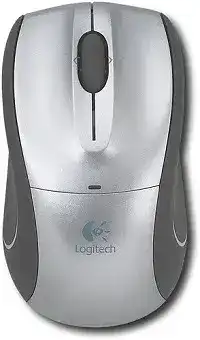
The receiver lights up, Windows reacts to the USB connection, yet the pointer may remain still after moving this older mouse to another computer. The Logitech V450 Laser Cordless Mouse Driver is mainly needed for its original SetPoint controls, tilt-wheel functions, zoom assignment, and wireless recovery tools. Ordinary clicks may work without Logitech software, but that does not prove every feature has loaded.
This notebook model uses a dedicated 2.4 GHz USB micro-receiver. It is not a Bluetooth mouse, and it predates Logitech Unifying receivers. The original receiver belongs with the device, so plugging in another Logitech dongle rarely restores communication. Begin by identifying the matching receiver before downloading several modern utilities that were built for later hardware.
Logitech V450 Laser Mouse Windows Driver Download
| Driver Name | Description | Supported OS | File Size | Download |
|---|---|---|---|---|
| SetPoint Full Installer (64-bit) | Full offline package for configuring mouse buttons, tracking speed, device settings, and battery status. | Windows 64-bit | 77.85 MB | |
| SetPoint Full Installer (32-bit) | Complete offline setup for managing hot-keys, pointer tracking, button assignments, and device-specific preferences. | Windows 32-bit | 75.81 MB | |
| SetPoint Smart Installer | Compact SetPoint installer for mouse customization that requires an internet connection during installation. | Windows | 3.5 MB | |
| Flow Scroll Full Installer | Full installation package that enables smoother scrolling behavior in supported applications without downloading setup components. | Windows | 17.38 MB | |
| Flow Scroll Smart Installer | Lightweight installer that downloads the required Flow Scroll components while the setup process is running. | Windows | 3.91 MB | |
| Logitech Connection Utility | Reconnects the Logitech V450 mouse with a compatible receiver when the original wireless pairing is lost. | Windows 10 32-bit/64-bit, Windows 8 32-bit/64-bit, Windows 7 32-bit/64-bit | 1.06 MB | |
| Legacy Connection Utility | Restores communication between the mouse and receiver on older Windows systems using the supported pairing tool. | Windows Vista, Windows XP | 2.08 MB |
Logitech V450 Laser Mouse Mac OS Driver Download
| Driver Name | Description | Supported OS | File Size | Download |
|---|---|---|---|---|
| Logitech Control Center | Provides Mac controls for assigning mouse buttons, adjusting tracking behavior, and managing supported device functions. | Mac OS X 10.13.x | 16.63 MB | |
| Logitech Control Center | Enables button configuration, pointer adjustments, scrolling preferences, and application-specific mouse commands on Mac. | Mac OS X 10.11.x | 17.06 MB | |
| Logitech Control Center | Adds configuration options for mouse buttons, cursor movement, scrolling response, and compatible Logitech hardware. | Mac OS X 10.7.x | 17.73 MB | |
| Logitech Control Center | Supports personalized button actions and tracking preferences for the Logitech V450 on older Mac computers. | Mac OS X 10.5.x | 18.7 MB | |
| Logitech Connect Utility | Pairs the V450 Laser Mouse with its compatible wireless receiver when the existing connection no longer works. | Mac OS X 10.4.x | 160.36 KiB |
The receiver was left inside the mouse
The V450 stores its micro-receiver in the mouse body for travel. Sliding the receiver into that compartment also switches the device off, which protects the two AA batteries while it sits in a notebook bag. Remove the dongle completely, insert it into the computer, and turn the underside power switch on before investigating Windows or SetPoint.
A partially released receiver can create confusion. It may look as though it has left the storage slot while the automatic power mechanism remains engaged. Pull it out fully, wait a moment, and watch the battery indicator when switching the mouse on. No light or pointer response at this stage points toward power rather than software.
Windows detects USB hardware but the pointer stays still
Disconnect the micro-receiver and shut the mouse off. Reinsert the dongle into a direct laptop port, turn the mouse on, and allow Windows time to register the input device. Try another USB port when the first one produces only a connection sound. During diagnosis, remove passive hubs and docking stations that add another layer between the receiver and computer.
Restarting with the receiver already attached can clear an incomplete USB registration. If the mouse then works until the next reboot, remove duplicate or failed mouse entries through Windows Device Manager and let the operating system rebuild them. Do not delete unrelated touchpad or keyboard devices while performing that check.
Recover the Dedicated Receiver Before Replacing Hardware
A V450 receiver can remain physically intact while losing its communication link with the mouse. The Logitech V450 Laser Cordless Mouse Driver package may include the SetPoint environment and a connection utility suitable for older cordless products. Use that pairing tool only after confirming battery power, receiver identity, and normal USB detection.
The mouse and receiver no longer communicate
Open the Logitech connection utility with the receiver plugged in. Follow the prompts to turn the mouse off and on at the requested point, then move it close to the dongle until the utility confirms communication. Finishing the process matters; closing the window immediately after the pointer moves may leave the recovery sequence incomplete.
Pairing attempts often fail when the batteries are almost exhausted. The indicator may flash briefly even though the cells cannot maintain the wireless transmission. Fit two known-good AA batteries before repeating the process. Match both cells to the polarity marks, and avoid mixing an old battery with a new one.
A replacement Logitech receiver does not work
USB shape alone does not determine compatibility. The V450’s dedicated micro-receiver cannot automatically pair through Unifying Software, and a modern Bolt receiver will not communicate with it. Obtain a receiver specifically compatible with the original V450 hardware and use the appropriate older connection utility when pairing support exists.
A dongle from another V450 may also require reconnection rather than immediate plug-and-play operation. If the recovery utility never sees that receiver, check its product markings and test whether Windows recognises it on another computer. A completely absent USB response usually indicates a receiver fault, not a mouse-control setting.
The connection drops near external devices
Short freezes can begin after adding a wireless adapter, external hard drive, USB hub, or docking station. Move the receiver to a port with a clearer path to the mouse and separate it from tightly packed USB equipment. On a desktop, a short extension cable can bring the dongle away from the metal case without changing the paired connection.
Test with nearby wireless accessories disconnected one at a time. This is more useful than changing every Windows pointer option together. When the pauses disappear after repositioning one device, keep that spacing and return the pointer speed to its previous value. Software acceleration cannot cure interruptions in the radio link.
SetPoint Controls for Tilt Scrolling, Zoom, and the Wheel
The Logitech V450 Laser Cordless Mouse Driver gives SetPoint access to the model’s wheel assignments. The wheel handles normal vertical movement, left-and-right tilt scrolling, a middle click, and supported zoom functions. Windows may provide vertical scrolling immediately while leaving horizontal movement or the assigned zoom command unavailable.
SetPoint installs but cannot identify the mouse
Confirm that you installed a SetPoint release compatible with both the V450 and the operating system architecture. A current Logitech control app may install normally yet omit this retired model. Remove only the incompatible mouse utility, restart Windows, reconnect the original receiver, and then install the suitable SetPoint package.
Close background copies of SetPoint before reinstalling. A damaged configuration can leave its icon visible while the program shows no recognised device. After the restart, connect the receiver directly rather than through a hub and open the control panel only after ordinary pointer movement has returned.
The wheel scrolls vertically but not sideways
Open the wheel section in SetPoint and confirm that left and right tilt remain assigned to horizontal scrolling. Apply the change, then open a wide spreadsheet, large image, or webpage with a visible horizontal bar. Tilting the wheel inside a window that contains no sideways content will produce no visible result.
Some programs capture the tilt signal for their own commands or ignore horizontal wheel input. Compare two unrelated applications before changing the assignment again. When it works in one program, the receiver and wheel are responding; the remaining fault lies with the application’s navigation behaviour or shortcut configuration.
Zoom opens the wrong command
The zoom action depends on both the SetPoint assignment and the application receiving it. Check which wheel click or tilt action carries the zoom command, save the setting, and try it in a document or image program that accepts zoom input. Browsers and specialist software may reserve the middle click for opening links, panning, or another tool.
Choose a different assignment when the program repeatedly overrides the original command. Keep the middle button on a standard click if you depend on it for browser tabs or document panning. The software cannot force every application to interpret the same button signal identically.
Scrolling jumps several lines or moves in the wrong direction
First compare the result in another window and lower the Windows scrolling-lines value if every wheel movement travels too far. Erratic jumps that remain after this adjustment may come from debris near the wheel encoder. Turn the mouse off and clear loose dust around the wheel with a soft brush or controlled air.
A worn wheel encoder can alternate direction even during a steady roll. Test the mouse on another computer without SetPoint modifications. When the same reversal occurs there, reinstalling software will not repair the mechanical reading. Continued cleaning may offer only temporary relief if the internal component has deteriorated.
Separate Tracking, Click, and Battery Faults
Laser tracking gave the V450 broader surface tolerance than many older notebook mice, but it cannot compensate for every reflective or transparent desk. A motion problem may also come from low power, wireless distance, or an unsuitable pointer-speed value. Check one cause at a time instead of treating every cursor symptom as a lost receiver link.
The cursor shakes or stops on part of the desk
Move the mouse onto a plain, opaque pad and clean the sensor opening with a dry, soft material. Glass, mirrors, highly polished desks, and repeated glossy patterns can still disrupt tracking. When movement becomes steady on the test pad, keep that surface or place a non-reflective mat over the troublesome area.
Inspect the sensor opening for hair that shifts as the mouse moves. A single fibre can cross the laser path intermittently and make the cursor jump only in certain directions. Avoid liquid cleaners near the opening, since residue can cloud the lens and create a new tracking problem.
The cursor feels slow after reinstalling Windows
A new operating system installation may reset pointer speed and acceleration. Adjust the Windows pointer slider gradually, then check the SetPoint speed control if it is active. Large changes in both places can make movement unpredictable, so return one control to its default before tuning the other.
Test slow movement as well as a quick sweep across the pad. If the pointer pauses during fast motion but behaves normally at low speed, inspect the wireless position and surface before raising sensitivity. A higher speed setting only magnifies the interruption; it does not remove its cause.
One click sometimes becomes two
Open the Windows mouse properties and move the double-click speed slightly faster, then test several folders or icons. This can reduce accidental double activation when the current timing threshold is too generous. It will not cure a switch that electrically sends two signals from one physical press.
Compare the left and right buttons in different applications. When only one switch duplicates clicks on another computer as well, internal wear is the likely cause. SetPoint assignments and receiver pairing will not rebuild that switch. Replacement becomes more practical when dragging files or selecting text no longer remains dependable.
The mouse will not wake or drains batteries quickly
Replace both AA batteries as a pair and inspect the compartment contacts for dirt or oxidation. Wipe accessible contacts with a dry lint-free cloth, then confirm that each battery sits firmly against its spring. A loose contact can cut power whenever the notebook or mouse moves, which resembles a brief wireless dropout.
Use the underside power switch when storing the mouse without placing the receiver back inside it. Receiver storage triggers the travel shutoff, but leaving the dongle in the computer means that mechanism cannot engage. Switching the V450 off manually prevents the device from waking inside a bag and consuming battery power.
Match the Symptom to the Part That Controls It
Use the Logitech V450 Laser Cordless Mouse Driver when basic movement works but SetPoint cannot provide tilt scrolling, zoom, middle-button assignments, or receiver recovery. A driver change is less likely to solve absent battery lights, a receiver that never appears as USB hardware, repeated double-clicks on multiple computers, or wheel direction changes caused by wear.
The quickest diagnosis comes from dividing the system into four parts. Two AA batteries power the device, the dedicated micro-receiver carries the wireless link, the laser sensor reads the surface, and SetPoint manages supported wheel functions. Test the failing part directly. This approach avoids confusing an incompatible receiver with bad software or blaming Windows for a worn click switch.