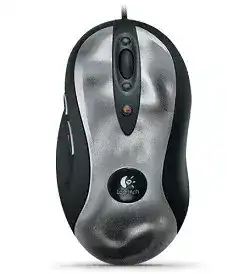
The Logitech MX518 Optical Gaming Mouse Driver becomes relevant when Windows moves the pointer but leaves the extra buttons, sensitivity controls, or saved assignments unavailable. This original wired model uses a USB connection, an optical sensor, dedicated sensitivity buttons, and programmable controls. It does not need Bluetooth pairing, a wireless receiver, charging software, or battery management.
Begin by confirming which MX518 version you own. The original Optical Gaming Mouse and the later MX518 Gaming Mouse share a familiar shape, but they do not use identical software. Installing a package meant for the newer release may leave the original device absent from the control screen even while ordinary clicking and movement continue through Windows USB input support.
Logitech MX518 Optical Gaming Mouse Windows Driver Download
| Driver Name | Description | Supported OS | File Size | Download |
|---|---|---|---|---|
| Logitech G HUB 64-bit | Customizes mouse buttons, pointer behavior, sensitivity levels, scrolling, shortcuts, profiles, and other gaming device settings. | Windows 11, Windows 10 64-bit | 67.08 MB | |
| Logitech Gaming Software 64-bit | Provides a full 64-bit package for configuring programmable controls, pointer sensitivity, game profiles, and onboard mouse functions. | Windows 11, Windows 10 64-bit | 119.96 MB | |
| Logitech Gaming Software 64-bit | Installs the complete 64-bit customization suite for assigning commands, adjusting tracking performance, and managing application-specific profiles. | Windows 10 64-bit, Windows 8 64-bit, Windows 7 64-bit | 120.04 MB | |
| Logitech Gaming Software 32-bit | Adds 32-bit support for button assignments, DPI adjustments, gaming profiles, macros, and compatible mouse configuration options. | Windows 10 32-bit, Windows 8 32-bit, Windows 7 32-bit | 109.04 MB | |
| Logitech G HUB | Manages button commands, pointer speed, scrolling behavior, shortcuts, and game profiles on supported older Windows systems. | Windows 8 32-bit/64-bit, Windows 7 32-bit/64-bit | 39.22 MB |
Logitech MX518 Optical Gaming Mouse Mac OS Driver Download
| Driver Name | Description | Supported OS | File Size | Download |
|---|---|---|---|---|
| Logitech G HUB | Configures mouse buttons, tracking sensitivity, scrolling, shortcuts, profiles, and supported gaming functions on current macOS releases. | macOS 26, macOS 15, macOS 14 | 11.36 MB | |
| Logitech G HUB | Enables button remapping, pointer adjustments, application shortcuts, game profiles, and device preferences for macOS 13. | macOS 13 | 10.43 MB | |
| Logitech G HUB Full Installer | Contains the complete installation package for managing mouse controls, sensitivity settings, scrolling behavior, profiles, and shortcuts offline. | macOS 11 | 5.02 MB | |
| Logitech Gaming Software Full Installer | Supplies the full legacy configuration package for programmable buttons, tracking levels, macros, and application-specific gaming profiles. | macOS 10.15, macOS 10.14, macOS 10.13, macOS 10.12 | 204.99 MB |
SetPoint installs but shows no useful controls
The original release commonly used Logitech SetPoint for button assignments and pointer options. Logitech no longer maintains that utility, so newer Windows versions may install it without exposing every old device page. Run the installer that matches the operating system architecture, restart Windows, and connect the mouse directly rather than through a dock during the first launch.
When SetPoint opens as a keyboard-only panel or displays no MX518 controls, remove conflicting Logitech packages before installing it again. A newer application may claim shared background components without supporting this older device. Keep only the package that recognizes the mouse. Adding several generations of Logitech utilities rarely restores a missing control panel and can make profile behavior harder to trace.
Logitech Gaming Software detects the mouse differently
Some later Logitech Gaming Software releases can recognize the original MX518 and expose sensitivity or button functions that SetPoint does not show on a modern system. Detection varies by software release and operating system. Open the application only after plugging the mouse into a direct USB port, then allow Windows to finish its initial device configuration before checking the software screen.
Do not expect G HUB support simply because the mouse belongs to Logitech’s gaming range. The original model predates G HUB by many years. When G HUB ignores it but basic movement works, that result does not prove the USB cable or sensor has failed. Use software intended for the older hardware generation instead of repeatedly reinstalling G HUB.
Restore DPI Buttons and Game Commands Without Fighting Every Profile
The Logitech MX518 Optical Gaming Mouse Driver can expose assignments beyond the standard left, right, and wheel clicks. The two buttons around the wheel change sensitivity by default, while thumb controls can carry navigation or game commands. Problems often appear when a game reads only conventional keyboard input or overrides the assignments selected in Logitech software.
Sensitivity buttons no longer change pointer speed
Test the DPI controls after closing all games. Move the pointer across the desktop, press the upper or lower sensitivity button once, and compare the distance again. If the speed changes outside the game, the hardware is responding and the title may be forcing its own raw-input or sensitivity behavior. Review the game’s mouse options before changing Windows speed.
If neither button reacts anywhere, restore the default mouse profile in the Logitech utility. An earlier assignment may have replaced DPI Up or DPI Down with another command. Reconnect the mouse after saving the profile. The original MX518 can change sensitivity from its physical controls, but software assignments may alter what those controls send.
A side button works in a browser but not in a game
Many games do not interpret generic forward and back commands as bindable mouse inputs. Assign the thumb control to an unused keyboard key in SetPoint or Logitech Gaming Software, then bind that key inside the game. This translation often works better than leaving the control set to a browser navigation command.
Choose a key that the game does not already use. Test press, hold, and release behavior because some actions need a continuous signal rather than a brief command. A button that performs one click but cannot remain held may have an unsuitable assignment. Replace the command with a plain keystroke and remove any macro timing before testing again.
Assignments disappear after the computer restarts
Check whether the Logitech background process still starts with Windows. Older configuration software may save an assignment but require its service or tray process to apply that assignment after login. Open the utility manually and test the same button. If it returns immediately, repair the startup entry or reinstall the matching software package.
Security tools can also prevent an old configuration program from writing its settings. Run the utility with normal user permissions first, save one simple button change, close it, and reopen it. Avoid importing several old profiles until that small change survives a restart. A damaged profile file can make every new assignment look temporary.
Fix Pointer Jumps, Diagonal Drift, and Sudden Sensitivity Changes
The cursor shoots toward a screen corner
A sudden jump to the top or side of the display usually deserves a surface and sensor check before any software change. Turn the mouse over and inspect the optical opening under bright light. Remove hair or loose dust with clean air and wipe the lens area gently with a dry, lint-free swab. Do not press against the optical components.
Next, test a plain cloth mouse pad with an even texture. Reflective desks, glass, glossy patterns, and sharply contrasting printed surfaces can confuse an older optical engine. If the movement remains erratic on several suitable pads and another computer, the fault may sit in the sensor, cable, or internal electronics rather than the Logitech MX518 Optical Gaming Mouse Driver.
Small movements feel jumpy or skip several pixels
Set Windows pointer speed near its middle position and temporarily disable enhanced pointer precision. Then select one moderate sensitivity level with the physical DPI controls. Combining a very high mouse setting with a low in-game value can make fine movement feel uneven, while aggressive acceleration changes the distance according to hand speed.
Test with raw input both enabled and disabled inside the affected game. Use only one layer for acceleration or sensitivity correction. Windows, Logitech software, and the game can each modify movement, and stacked adjustments make diagnosis difficult. Once movement feels predictable, change the game sensitivity gradually instead of switching several controls together.
The pointer slows down during play
An accidental press on the lower sensitivity button can make the device appear to lose performance. Return both DPI buttons to their defaults and check whether your finger reaches them during rapid wheel use. When the slowdown happens only in one title, remove its application profile and compare the result with a general desktop profile.
Software that closes unexpectedly can also return the mouse to a default sensitivity. Keep the required Logitech process running and watch whether the control application exits when the game launches. Disable duplicate mouse utilities, overlays, or peripheral managers during testing. Two programs attempting to manage the same buttons can produce inconsistent values.
USB Disconnects, Sleep-Wake Failures, and Cable Symptoms
The original MX518 receives power and sends all input through its fixed USB cable. A Windows disconnect sound, frozen pointer, or repeated device reconnection therefore points toward the port, cable, USB controller, or power management. It is not a receiver problem, and no pairing utility can repair it.
Clicks work after wake, but the pointer does not move
Unplug the mouse and reconnect it to a different direct USB port. If this restores tracking after every sleep cycle, review USB selective suspend and the power-management option for the related USB hub in Device Manager. Prevent Windows from switching off that hub during the test, then install the current chipset and USB controller package from the computer manufacturer.
Do not rely only on disabling and enabling the mouse entry. The optical sensor may need a complete power reset, which happens when you remove the USB plug. Test another port controlled by a different hub when possible. Front-panel extensions and monitor ports add another connection point and can behave differently after sleep.
Windows repeatedly plays the USB disconnect sound
Hold the mouse still and gently change the cable position near the point where it enters the shell. Do the same near the USB plug without sharply bending either end. If Windows disconnects at one position, the cable may have an internal break. Software cannot correct a conductor that loses contact when the cable moves.
Check another computer before considering repair. A stable result elsewhere points to the first computer’s USB port or controller. Failure on both systems, especially when cable movement triggers it, indicates a physical problem. Avoid opening or cutting the cable unless you have suitable repair experience; replacing the mouse is safer than an improvised USB splice.
The mouse is absent after a Windows update
Shut down the computer fully, disconnect unnecessary USB devices, and start it with the MX518 attached to one direct port. In Device Manager, remove only the failed or duplicate mouse entry, then reconnect the device so Windows rebuilds its standard USB input record. Do not delete unrelated keyboard or controller entries.
If another mouse or gaming controller began conflicting at the same time, test each device separately. Older peripheral software can install filters that affect more than one USB input product. Remove the conflicting package, restart Windows, and confirm that the MX518 remains detected before reinstalling any secondary controller software.
Separate Wheel Dirt From an Encoder or Click Failure
Scrolling stops while middle click still works
The wheel rotation and middle click use different mechanisms, so one can fail while the other continues. First test several programs and check the Windows scrolling value. When rotation fails everywhere, switch off the computer, unplug the mouse, and clear loose debris from the wheel openings with short bursts of clean compressed air.
The MX518 wheel uses internal movement detection that can become obstructed by dust. Cleaning around the visible gap may restore intermittent scrolling, but do not flood the area with solvent. If rotation still produces no response on another computer, the internal wheel sensor or mechanical parts may need professional cleaning or replacement.
The page moves in the opposite direction or jumps back
Erratic up-and-down movement usually differs from a software reversal. Check whether every application shows the same behavior. Random direction changes across multiple systems suggest contamination or wear inside the wheel mechanism. A deliberate, consistent reversal in one application points instead to that program’s scrolling preference.
Try slow individual wheel steps. If one step regularly creates movement in both directions, software reinstallation is unlikely to help. Cleaning may improve an obstructed wheel, but worn internal parts require repair. Preserve the mouse feet if a technician opens the shell, since careless removal can change how the device glides afterward.
The middle button double-clicks or misses presses
Remove any custom assignment from the wheel click and test it as a normal middle button. Check tabs, links, and a mouse-input test page. If one press creates two actions everywhere, adjust the operating system’s double-click timing only as a comparison; that setting mainly targets the primary button and may not conceal a failing wheel switch.
Use compressed air around the wheel gap, then test again after the device is dry and unplugged. Continued missed or repeated middle clicks usually indicate switch wear. Avoid unofficial firmware tools, registry patches, or macro delays that merely hide the symptom. They cannot restore a switch that no longer closes consistently.
Choose the Software by Hardware Generation, Not by Name Alone
For the original wired model, finish by checking three things separately: standard USB detection, physical control behavior, and optional assignment software. The Logitech MX518 Optical Gaming Mouse Driver should add control access without becoming the only reason the pointer works. Windows can handle ordinary movement and clicks even when the legacy configuration panel is unavailable.
Keep a working installer that matches your operating system, since official support for SetPoint has ended and the product page may no longer offer a current download. Save a copy of any useful profile as well. When a future Windows change breaks only the extra controls, restore the known software version rather than treating the wired optical hardware as a modern G HUB device.