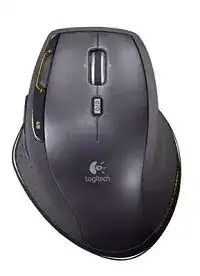
The cursor may move as soon as the USB mini receiver loads, but the wheel modes, thumb controls, and tracking buttons can still feel unfinished. The Logitech MX 1100 Cordless Laser Mouse Driver belongs in that gap between basic Windows mouse movement and the fuller Logitech control layer. This model uses a cordless USB receiver, invisible laser tracking, two AA alkaline batteries, SetPoint on Windows, Logitech Control Center on Mac, and a mode-shift wheel.
The MX 1100 is not a Bluetooth mouse and it is not a Unifying model. Treating it like one creates wasted fixes, especially when someone searches for a pairing button on the receiver or tries newer Logitech apps that do not know this older device. The receiver has no connect button, so the repair path starts with the right USB receiver, power, SetPoint, and the mouse’s own controls.
This page focuses on the faults that usually bring this mouse back into service: receiver detection without full control, scroll mode confusion, pointer speed jumps, thumb button loss, short battery life, wake delays, and wheel behavior that changes between programs. The fixes below stay tied to hardware this model actually has.
Logitech MX 1100 Cordless Laser Mouse Windows Driver Download
| Driver Name | Description | Supported OS | File Size | Download |
|---|---|---|---|---|
| SetPoint Software 64-bit | Full offline SetPoint package for mouse button settings, tracking speed, hot-keys, and device-specific controls. | Windows 11, Windows 10 64-bit, Windows 8 64-bit, Windows 7 64-bit | 80.45 MB | |
| SetPoint Software 32-bit | Complete offline SetPoint installer for button assignments, pointer speed, battery status, Caps Lock, and Num Lock alerts. | Windows 11, Windows 10 32-bit, Windows 8 32-bit, Windows 7 32-bit | 78.04 MB | |
| SetPoint Smart Installer | Small SetPoint web installer for mouse customization, requiring an internet connection during setup. | Windows 11, Windows 10 32-bit/64-bit, Windows 8 32-bit/64-bit, Windows 7 32-bit/64-bit | 4.61 MB | |
| Logitech Connection Utility | Utility for repairing the wireless receiver connection when the mouse does not respond correctly. | Windows 11, Windows 10 32-bit/64-bit, Windows 8 32-bit/64-bit, Windows 7 32-bit/64-bit | 1.04 MB |
Logitech MX 1100 Cordless Laser Mouse Mac OS Driver Download
| Driver Name | Description | Supported OS | File Size | Download |
|---|---|---|---|---|
| Logitech Control Center Software | Mac control software for configuring mouse buttons, scrolling behavior, pointer actions, and device settings. | macOS 11, macOS 10.15, macOS 10.14, macOS 10.13 | 17.76 MB | |
| Logitech Control Center Software | Logitech Mac software for button customization, scrolling preferences, and model-specific mouse behavior. | Mac OS X 10.13, Mac OS X 10.12, Mac OS X 10.11 | 17.15 MB | |
| Logitech Control Center Software | Older Mac package for assigning mouse controls and adjusting supported Logitech device functions. | Mac OS X 10.11, Mac OS X 10.10, Mac OS X 10.9, Mac OS X 10.8 | 17.06 MB |
First separate receiver detection from Logitech control
Open the mouse settings only after the USB receiver appears in the operating system. If the pointer moves but custom controls remain unavailable, the receiver has done its basic job and the software layer needs attention. If the pointer does not move at all, software customization will not help until the receiver and power checks pass.
Use a direct USB port for the mini receiver while testing. Avoid hubs, monitor ports, and keyboard pass-through ports during the first repair attempt. Once the mouse works normally, you can move the receiver back to the preferred port and check whether the fault returns.
Receiver, Power, and SetPoint Order for MX 1100 Setup
The Logitech MX 1100 Cordless Laser Mouse Driver setup works best when you handle the physical connection before the control software. Insert two good AA alkaline batteries, switch the mouse on, plug the original mini receiver into USB, and wait for the operating system to finish the input device profile. Then install the Logitech package if buttons or wheel functions still need mapping.
Use the matching mini receiver
The MX 1100 receiver uses cordless USB for this generation, and it should not be replaced with a random modern receiver. If the mouse came without its receiver, first confirm receiver compatibility before spending time on software. A wrong receiver can still appear as a Logitech USB device while the mouse itself never responds.
When a used MX 1100 arrives with several old Logitech dongles in the box, test only one receiver at a time. Keep the other wireless receivers unplugged during setup. Multiple Logitech USB receivers can make the troubleshooting screen look busy while none of them talks to this exact mouse.
Install SetPoint only after the pointer moves
SetPoint is the useful Windows control package for this older mouse generation. Install it when standard movement works but the button assignments, zoom control, application switch behavior, or wheel options do not appear. Reinstalling SetPoint before the receiver responds usually hides the real fault and adds another layer to undo later.
If SetPoint opens but does not list the MX 1100, restart the computer with the receiver already plugged in. Then open SetPoint again. The Logitech MX 1100 Cordless Laser Mouse Driver cannot expose button controls until the device profile and receiver session both load cleanly.
Mac control depends on the older Logitech panel
On older Mac systems, Logitech Control Center handled this mouse generation. If the pointer works but special controls do not, check whether the Logitech preference pane still opens on that macOS version. On newer systems, the mouse may continue as a standard input device even when the older control panel no longer fits the operating system.
Do not install several Logitech control apps for the same mouse. Keep the setup limited to the package that recognizes the MX 1100. If a newer Logitech app ignores the device, remove it from the repair path and use system mouse settings plus the older Logitech control software where it still runs.
Scroll Wheel Problems That Come From the Mode Button, Not the Sensor
The MX 1100 has a MicroGear-style wheel with a mechanical mode-shift button. That means some scroll complaints come from the wheel mode, not from Windows, a browser, or the driver package. Pressing the small button below the wheel switches between faster free-spinning scroll and click-to-click movement.
Page jumps too far while scrolling
If a document shoots past the target, the wheel may be in free-spinning mode. Press the wheel mode button once and test again in a long page. The click-to-click mode gives more controlled movement for forms, menus, and normal browsing, while the free-spinning mode suits long documents and large pages.
SetPoint may also affect scroll feel. If scrolling still feels too fast after changing the hardware mode, open the mouse software and reduce scroll lines or disable extra smooth-scroll behavior when that option creates overshoot. Test in a document, not only in a web page with heavy scripts.
Wheel scrolls but horizontal movement does nothing
Tilt-wheel behavior needs both application support and Logitech control support. Test horizontal scrolling inside a wide spreadsheet or an image editor canvas, not inside a page with no left-right movement. If the program ignores horizontal input, the wheel can look faulty even though the hardware sends the command.
Open the Logitech control panel and check the wheel assignment. A previous owner may have changed tilt movement to another command. Restore the default action before reinstalling software, because a saved assignment can survive long enough to mislead the next troubleshooting attempt.
The wheel changes direction or misses small movements
Dust around the wheel can cause erratic scrolling, especially on an older mouse. Blow around the wheel gently and rotate it through both scroll modes. Do not flood the wheel area with liquid. If cleaning improves the first few scrolls and the problem returns, the wheel mechanism may have physical wear rather than a software fault.
When scrolling becomes worse only after SetPoint changes, reverse the last scroll setting first. The Logitech MX 1100 Cordless Laser Mouse Driver should give access to controls, but a wrong scroll preference can make a good wheel feel unpredictable.
Pointer Speed, Laser Tracking, and the DPI Buttons
The MX 1100 includes tracking-speed buttons, so a sudden jump in pointer speed may come from the mouse itself. People often press those buttons by accident near the top surface and then look for a Windows fault. Before reinstalling anything, use the tracking buttons and check whether the pointer returns to a comfortable speed.
Cursor moves too fast after a driver change
SetPoint and Windows can both influence pointer speed. Put the mouse on a matte surface, lower speed in the system mouse panel, and then adjust the MX 1100 tracking buttons. Change one layer at a time. If you adjust hardware speed and software speed together, the pointer can overshoot again after the next restart.
For photo editing, spreadsheets, and text selection, avoid a very high tracking level. The laser sensor can handle quick movement, but precise work usually feels better with moderate pointer speed and a consistent desk surface.
Pointer skips on glossy or uneven desks
Laser tracking is strong, but it does not make every surface perfect. Glossy white desks, glass, reflective pads, and rough fabric can break pointer movement. Test on a plain matte pad before changing receiver placement or software. A surface test gives a fast answer without disturbing a working driver setup.
If the pointer skips only when the receiver sits behind a desktop tower, try a front USB port or a short USB extension. The receiver range may be generous on paper, but desk metal, computer cases, and nearby wireless devices can still weaken the path during real use.
Movement stops after the computer wakes
A wake delay can come from USB power saving or weak AA batteries. Switch the mouse off and on once, wait for the receiver to respond, and avoid pressing buttons repeatedly during the first few seconds. If the issue repeats, check USB selective suspend or try a port that stays active after sleep.
Replace both AA batteries together when wake trouble appears with pointer lag. The MX 1100 is not rechargeable, and charging-cable fixes do not apply. Mixed batteries often keep the power light alive while the radio link becomes unreliable under movement.
Thumb Button and Application Switch Faults
The side controls are one reason people still keep this mouse. When those buttons stop responding, the hardware may still be fine. Basic operating system support usually handles left click, right click, and movement, but the thumb controls need the Logitech control layer to assign and interpret extra commands.
Back and forward buttons do nothing
Open SetPoint and check the button assignments for browser navigation. Then test in a normal browser window with page history. Some programs ignore back and forward commands, so a failed test inside one app does not prove the button is broken. A browser test gives a clearer result.
If the buttons worked before a Windows update, repair SetPoint or reinstall the older Logitech package after removing the existing entry. Keep the receiver plugged in during the reinstall so the software can identify the connected mouse instead of loading a generic profile.
Application switch opens the wrong action
The MX 1100 has an application-switch style control, and old software assignments can change how it behaves. Open the Logitech control panel and inspect that button directly. If it launches a command you do not use, assign it again rather than resetting every mouse setting.
On a second-hand mouse, assume the previous setup may have custom actions. Restoring the default profile often fixes strange behavior faster than reinstalling the driver package. After that, add custom commands one at a time so you know which change caused the issue.
Clicking feels delayed or double-clicks unexpectedly
Double-click trouble can come from the Windows double-click speed setting, SetPoint assignments, or worn switches. Start with the software side because it costs nothing. Lower or raise double-click speed in the operating system and test folder opening. If the same button fires twice in every program, hardware wear becomes more likely.
Do not mask a failing switch with extreme double-click settings. A moderate setting should work for normal use. If one button misfires while all other controls behave correctly, the receiver and driver are probably not the main problem.
Battery and Receiver Checks Before Declaring the MX 1100 Finished
The final check should match the way this model actually fails: two AA cells, a cordless USB receiver, mode-shift scrolling, SetPoint controls, and a laser sensor that prefers a sensible surface. Keep Bluetooth, Unifying, Bolt, and rechargeable-battery fixes out of the process because they belong to other Logitech designs.
If the mouse feels unreliable after several changes, strip the setup back to a plain test. Use known-good AA alkaline batteries, plug the original receiver directly into USB, test movement on a matte pad, press the scroll mode button, and then open SetPoint only after the pointer behaves. That order catches most false driver problems.
The Logitech MX 1100 Cordless Laser Mouse Driver is most useful after the receiver has already created a working connection. Use it for wheel options, thumb controls, application switching, and pointer behavior, not as a substitute for the correct receiver or steady battery power. Once those basics hold, this older MX mouse can still feel precise and comfortable.