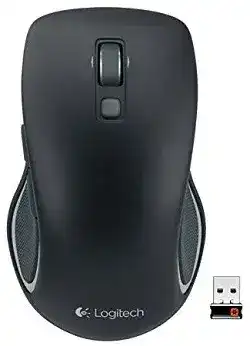
The Logitech M560 Wireless Mouse uses a Logitech Unifying USB receiver, so it connects through a small wireless dongle instead of Bluetooth. Windows can run the basic pointer, click, and scroll functions after the receiver starts working.
The Logitech software adds the part that Windows cannot manage by itself. It lets you use the Windows shortcut buttons, back and forward actions, wheel tilt controls, and other button behavior that belongs to this model.
This mouse has a scroll wheel with hyper-fast and click-to-click scrolling, wheel tilt, Windows shortcut buttons, a battery LED, an on and off switch, receiver storage, and one AA battery. Install the matching package when the extra controls do not respond after normal receiver setup.
Logitech Wireless Mouse M560 Windows Driver Download
| Driver Name | Description | Supported OS | File Size | Download |
|---|---|---|---|---|
| Logitech Unifying Software | Utility for pairing and managing compatible Logitech Unifying receiver devices on newer Windows systems. | Windows 11 32-bit/64-bit, Windows 10 32-bit/64-bit, Windows 8 32-bit/64-bit, Windows 7 32-bit/64-bit | 3.96 MB | |
| SetPoint 32-bit Software | Full offline SetPoint package for 32-bit Windows with mouse button settings, hot-key controls, and battery status options. | Windows 11 32-bit, Windows 10 32-bit, Windows 8 32-bit, Windows 7 32-bit | 78.04 MB | |
| SetPoint 64-bit Software | Complete 64-bit SetPoint installer for offline setup with tracking speed, device-specific settings, and lock-key notifications. | Windows 11 64-bit, Windows 10 64-bit, Windows 8 64-bit, Windows 7 64-bit | 80.45 MB | |
| SetPoint Smart Installer | Small SetPoint web installer for Windows that requires an internet connection during installation. | Windows 11 32-bit/64-bit, Windows 10 32-bit/64-bit, Windows 8 32-bit/64-bit, Windows 7 32-bit/64-bit | 4.61 MB | |
| Unifying Software for Windows | Windows pairing tool for connecting the Logitech Wireless Mouse M560 through a Unifying USB receiver. | Windows 11 32-bit/64-bit, Windows 10 32-bit/64-bit, Windows 8 32-bit/64-bit, Windows 7 32-bit/64-bit | 3.95 MB |
Logitech Wireless Mouse M560 Chrome OS Driver Download
| Driver Name | Description | Supported OS | File Size | Download |
|---|---|---|---|---|
| Unifying Software for Chrome OS | Chrome OS utility for adding or managing Logitech Unifying receiver connections with supported wireless devices. | Chrome OS | 52.58 KiB |
Getting the M560 Receiver and Software Ready
Start with the receiver before working on the software. Plug the Unifying receiver directly into a USB port on the computer, turn the mouse on, and give Windows a short time to load its basic USB receiver driver. Then move the pointer and test left click, right click, and wheel movement.
Use the receiver directly, not through a weak hub
The M560 can lose signal when the receiver sits in a loose USB hub or behind a crowded desktop tower. Plug the receiver into the computer itself. If the pointer feels jumpy, try a front USB port or a port on the other side of the laptop.
Keep the receiver away from USB 3.0 devices, external drives, docking stations, metal laptop stands, and thick desktop panels. A short USB extension cable can also help because it moves the receiver closer to the mouse and away from electrical noise.
Install the right Logitech utility for the controls
For this model, SetPoint is usually the package that enables the Windows shortcut buttons and older Logitech mouse controls. A basic Windows driver may move the pointer, but it may not activate the Windows menu button, desktop button, back and forward actions, or wheel assignments.
If the smart installer fails, stalls, or does not detect the mouse, use the full installer that matches your Windows type, such as the 64-bit package on a 64-bit system. Restart after installation, then open the Logitech utility and check whether the M560 appears in the device list.
Pair the M560 again when the receiver changed
A replacement Unifying receiver will not always control the mouse just because it fits in the USB port. Open the Unifying pairing utility, follow the pairing screen, then turn the mouse off and on when the utility asks for it. The mouse pairs to one receiver at a time.
If the pairing tool cannot find the mouse, replace the AA battery first and keep the mouse close to the receiver. Also remove any old Logitech receiver tools that conflict with the current setup, then reinstall only the package you need for pairing and button control.
M560 Receiver, Wheel, Button, and Battery Behavior
The M560 usually fails in a few clear ways: no response, weak wireless signal, wrong scroll mode, inactive Windows buttons, or missing Logitech software detection. Match the symptom first, because a receiver problem and a button assignment problem need different handling.
The mouse does not move after plugging in the receiver
Turn the mouse off, wait a moment, and turn it back on. Then check the receiver in another USB port. If the receiver sits in a hub, remove it and plug it directly into the computer. A hub can power the receiver but still give poor communication.
Replace the AA battery if the battery LED shows red or if the pointer never wakes up. Also check the battery direction inside the compartment. A slightly loose battery cover or reversed battery can make the mouse look completely dead.
The Unifying receiver will not pair with the M560
Open the Logitech pairing utility and start a fresh pairing session. When the utility asks you to switch the mouse off and on, do it slowly and keep the mouse near the receiver. This reset often works when Windows sees the receiver but the pointer still does not move.
If pairing still fails, check that the receiver has the Unifying mark and not a receiver from a non-Unifying Logitech device. The M560 needs a compatible Unifying receiver, and a random Logitech dongle from another product may not pair with it.
The pointer skips, freezes, or moves unevenly
Signal noise often causes short freezes on this model. Move the receiver away from USB 3.0 storage devices, docking stations, and metal objects. If the receiver sits at the back of a desktop PC, try a front port or a short USB extension cable.
Test the mouse on a plain surface before changing software. Very shiny, glass, mirrored, or deeply textured surfaces can disturb tracking. A simple mouse pad or sheet of plain paper can show quickly whether the surface causes the pointer movement.
Scrolling is too fast or feels out of control
The M560 wheel can switch between hyper-fast scrolling and click-to-click scrolling. Press the wheel down to change the mode. If pages fly too far with one small movement, the wheel may sit in hyper-fast mode instead of the normal stepped mode.
Also check the Windows scroll setting and SetPoint wheel setting. If one program scrolls normally and another scrolls too quickly, the app may have its own scroll behavior. Test in a browser and in a simple document before changing every setting.
The wheel tilt does not go back or forward
The wheel tilt can work as back and forward in Internet use, but the action depends on the software and the program. Test it in a browser first. If it works there but not in another app, the other app may not accept that shortcut.
Open SetPoint and check the wheel tilt assignments. If another profile changed the left and right tilt actions, restore the default back and forward setting. Restart the browser after changing the assignment, because some apps only pick up the new action after reopening.
Windows shortcut buttons do nothing
The Windows shortcut buttons need the Logitech software for full behavior. Without the utility, Windows may only run the basic mouse functions. Install SetPoint, restart the computer, then check whether the shortcut button and desktop button respond.
If the buttons worked before and stopped after a Windows update, reinstall the matching SetPoint package. Remove older Logitech utilities first when the device list looks empty or the wrong mouse appears. Keeping two old Logitech control tools can create button conflicts.
SetPoint opens but the M560 is missing
First check whether the pointer moves. If the pointer does not move, fix the receiver connection or pairing before working inside SetPoint. The software cannot control the mouse when Windows has not recognized the receiver connection.
If the pointer works but SetPoint does not show the M560, uninstall the old Logitech package, restart, and install the full Windows package again. Use the installer type that matches the system. On many newer Windows computers, the 64-bit package gives cleaner detection than a failed smart install.
Back and forward actions work in one browser but not another
Button actions may change between apps. Test the tilt wheel and side controls in a normal browser tab, then test them in File Explorer. If they work in one place, the receiver and mouse hardware probably work.
Open the Logitech utility and check for application-specific assignments. Remove the app rule or return the button to the default action. After that, close and reopen the app where the button failed, then test the same page again.
The mouse wakes slowly after the computer sleeps
A wireless mouse may take a moment to respond after sleep, but it should not stay disconnected. Unplug the receiver, reconnect it, and move it to a direct USB port. Then restart Windows and test sleep again.
If the issue happens only after long idle time, check USB power saving for the receiver and the USB controller. Turn off the option that lets Windows cut power to the device to save energy. This can stop repeated wake failures on laptops.
Clicks double-click or miss the first press
Start with the battery and button area. Replace the AA battery, clean around the click buttons with dry air, and test the mouse on another computer. If the same button double-clicks everywhere, the switch may have wear from long use.
If it happens only on one computer, adjust the double-click speed in Windows and remove custom SetPoint button actions. A very fast double-click setting or a changed button profile can make normal clicks feel wrong even when the hardware still works.
The battery LED turns red too soon
Use a fresh AA alkaline battery and check the direction marks in the battery compartment. Weak or mixed-quality batteries can make the LED show red early, especially when the wireless link struggles because the receiver sits far away.
Wipe the battery contacts gently with a dry cloth if the power cuts in and out. Turn the mouse off when storing it in a bag, and keep the receiver inside the storage slot so the mouse does not stay awake during travel.