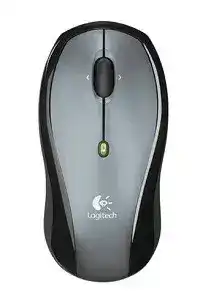
A silent receiver light, a frozen pointer, or a mouse that works only after several reconnect attempts can make this older cordless model feel difficult to trust. The Logitech LX6 Cordless Optical Mouse Driver is most useful after the receiver and mouse already have power, because this model depends on its dedicated RF receiver instead of Bluetooth or Unifying pairing.
The LX6 uses a receiver that connects through USB or PS/2, and the mouse runs on two AA batteries. It also supports side-to-side scrolling plus zoom through Logitech software on supported systems. That means a normal Windows pointer can appear before every wheel feature or control option works correctly.
Treat this mouse as an older receiver-based device. Do not look for Bluetooth menus, Logi Bolt pairing, or Unifying receiver tools. The practical repair path starts with the receiver cable, the connect buttons, battery contact, and the SetPoint control layer where the operating system still supports it.
Logitech LX6 Cordless Optical Mouse Windows Driver Download
| Driver Name | Description | Supported OS | File Size | Download |
|---|---|---|---|---|
| SetPoint Software 64-bit | Full offline SetPoint package for mouse button settings, tracking speed, device-specific options, and battery status. | Windows 11, Windows 10 64-bit, Windows 8 64-bit, Windows 7 64-bit | 80.45 MB | |
| SetPoint Software 32-bit | Full offline SetPoint installer for customizing mouse buttons, hot-keys, pointer behavior, Caps Lock, and Num Lock alerts. | Windows 11, Windows 10 32-bit, Windows 8 32-bit, Windows 7 32-bit | 78.04 MB | |
| SetPoint Smart Installer | Small SetPoint web installer for device-specific mouse settings and status features; internet is required during installation. | Windows 11, Windows 10 32-bit/64-bit, Windows 8 32-bit/64-bit, Windows 7 32-bit/64-bit | 4.61 MB |
Logitech LX6 Cordless Optical Mouse Mac OS Driver Download
| Driver Name | Description | Supported OS | File Size | Download |
|---|---|---|---|---|
| Logitech Control Center Software | Mac customization software for Logitech mouse controls, scrolling behavior, button assignments, and device preferences. | macOS 11, macOS 10.15, macOS 10.14, macOS 10.13 | 17.76 MB | |
| Logitech Control Center Software | Control Center package for adjusting mouse buttons, movement settings, and model-specific Logitech options on older Mac systems. | Mac OS X 10.13, Mac OS X 10.12, Mac OS X 10.11 | 17.15 MB | |
| Logitech Control Center Software | Legacy Mac software for configuring Logitech mouse button actions, pointer response, and supported device behavior. | Mac OS X 10.11, Mac OS X 10.10, Mac OS X 10.9, Mac OS X 10.8 | 17.06 MB |
Receiver cable choice changes the first test
If the receiver uses USB, connect it directly to the computer and let the operating system detect it before pressing connect buttons. If the setup uses PS/2, shut the computer down before attaching the receiver. PS/2 ports often do not behave like hot-plug USB ports, so a restart matters.
After the receiver appears, press the receiver connect button and then press the connect button on the mouse. Keep both devices still for a few seconds. Moving the mouse during the link attempt can make you think pairing failed when the receiver simply has not finished the handshake.
Make the LX6 Receiver Talk Before SetPoint Takes Over
The Logitech LX6 Cordless Optical Mouse Driver cannot fix a receiver that the computer never detects. Start with the physical link, then install software for wheel features and settings. This order avoids a common loop where SetPoint opens but no Logitech mouse appears inside the control panel.
Receiver light responds but the pointer does not move
A receiver light can show power without proving that the mouse has linked. Press the connect button on the receiver first, then the connect button on the underside of the LX6. If nothing changes, turn the mouse off, reseat both AA batteries, switch it on again, and repeat the link process once.
Do not keep pressing both buttons rapidly. Older cordless Logitech receivers need a clean sequence. If you rush the buttons, the receiver may leave pairing mode before the mouse broadcasts its signal. One slow attempt usually tells you more than five rushed attempts.
Wrong receiver or mixed Logitech parts
The LX6 does not use a universal Unifying receiver. If the original receiver has been replaced with a small orange-logo receiver or a receiver from another Logitech mouse, the LX6 may never pair. Match the mouse to the receiver that came with this model or a compatible replacement intended for that older receiver system.
This issue appears often when an old mouse comes from a drawer without its original desktop receiver. The mouse can still power on, and the sensor can still glow, but it cannot communicate through an unrelated receiver. Software installation will not change that hardware mismatch.
USB detection works on one port but not another
If the receiver works in one USB port and fails in another, leave the software alone and test the port path. Use a direct motherboard port for the first setup, then try a front port or powered hub only after the mouse links. Some old receivers behave badly through passive hub cables.
For desktop towers, desk position also matters. A metal case, monitor stand, or crowded cable area can weaken the receiver’s radio path. Place the receiver where it has a clearer line to the mouse, then test pointer movement before changing speed settings.
SetPoint for Wheel Tilt, Zoom, and Older Windows Controls
Basic movement may work through standard mouse support, but the LX6 was sold with features that need Logitech’s control software. Side-to-side scrolling and zoom are the main reasons to install SetPoint on systems that still support this model. Without that layer, the wheel may act like a plain vertical scroller.
Side-to-side scrolling does nothing
First test the wheel in a program that actually has horizontal content. A narrow web page will not prove anything. Open a wide spreadsheet, large image, or document with horizontal movement, then tilt the wheel left and right. If the pointer works but wheel tilt does not, install or repair SetPoint.
After installing the Logitech LX6 Cordless Optical Mouse Driver package, open the Logitech control panel and check the wheel assignment. A wheel tilt action can switch between horizontal scroll, zoom, or another command. Restore the default action if the feature changed after a previous setup.
Zoom activates when scrolling was expected
Zoom trouble usually comes from an assignment mismatch rather than a broken wheel. Open the Logitech settings and review the wheel function. If zoom triggers in documents, switch the control back to side-to-side scrolling or normal wheel behavior, then test again in the same application.
Some programs handle wheel tilt differently. A photo viewer may respond to zoom while a spreadsheet expects horizontal scroll. Test the LX6 in two different programs before uninstalling SetPoint, because the software may be working while the application interprets the input in its own way.
SetPoint opens but does not show the LX6
When SetPoint runs but cannot see the mouse, return to the receiver link. The control panel needs the device to communicate through the receiver before it can show model-specific controls. Reconnect the receiver, press the receiver and mouse connect buttons again, then restart SetPoint.
If several Logitech software versions sit on the same Windows installation, remove the extra ones and keep the SetPoint build that supports older cordless mice. Newer Logitech apps may not list the LX6, and mixing them can hide the older control page.
Pointer Movement, Optical Tracking, and Desk Surface Trouble
The LX6 uses optical tracking, so the desk surface can create problems that look like receiver faults. Glossy plastic, glass, mirror-finish desks, uneven fabric, or a patterned surface can make the cursor jump or stop. Test on a plain mouse pad before changing software.
Pointer drifts or jumps after a good link
If the receiver link stays active but the pointer wanders, clean the sensor window and switch to a matte surface. A small hair, dust patch, or shiny desk area can confuse the optical sensor. This is especially noticeable when the mouse sits at an angle or moves near the edge of a pad.
Then adjust pointer speed in Windows or SetPoint. The LX6 has a high-definition optical sensor for its era, and a high operating system speed can make small hand movement feel exaggerated. Lower speed first, then change acceleration only if the pointer still feels hard to place.
Cursor freezes for a moment during normal work
Short freezes often point to battery contact or radio dropouts. Open the battery compartment, check both AA cells, and make sure they sit firmly against the contacts. If the mouse works after a tap on the shell, the battery bay deserves attention before the driver does.
Radio dropouts can also appear when the receiver sits behind a monitor, tower, or large metal object. Put the receiver in a more open spot and test the mouse at the same distance you normally use. Do not judge the fix from a quick movement right beside the receiver.
Click works but movement fails
When clicks register but movement does not, the receiver link may still be alive while the optical sensor struggles. Clean the sensor area and test on a different surface. If movement returns, the issue was tracking, not SetPoint, not the receiver, and not Windows.
If clicks and movement both stop at once, check power and link instead. That symptom usually means the mouse lost connection or battery voltage dropped. Replace both AA batteries together, then repeat the receiver connect sequence.
Battery Behavior That Looks Like a Driver Fault
Two weak AA batteries can produce strange LX6 symptoms: delayed wake, scroll failure, pointer stops, or random disconnects. Replace both cells at the same time, and avoid mixing brands or ages. The mouse may power the sensor light while still lacking enough strength for steady wireless communication.
The mouse wakes only after shaking
A delayed wake can happen when batteries sit loosely or the contacts have light residue. Remove the batteries, wipe the contacts with a dry cloth, and reinstall the cells firmly. Turn the mouse off and on once, then wait before pressing the connect button again.
If the mouse wakes slowly every time, leave it on the desk during testing and avoid lifting it repeatedly. Lifting changes sensor readings and can make a weak battery problem look like optical tracking trouble.
Battery life became very short
The LX6 was designed for long battery life, but old storage conditions can change that. Check that the power switch does not remain on inside a bag or drawer. Also inspect the mouse for a stuck button, because a pressed button can keep the device active longer than expected.
Use alkaline AA batteries for a clean test. Rechargeable cells may work, but low-voltage or worn rechargeable pairs can confuse troubleshooting because they drop earlier under load. When diagnosing connection trouble, use known-good fresh cells first.
Battery indicator warning appears too soon
A low battery warning soon after replacement usually means one cell is weak, installed poorly, or not making clean contact. Remove both cells and reinstall them with the polarity marks matched carefully. If the warning returns, test another pair before changing any software.
The Logitech LX6 Cordless Optical Mouse Driver should not be your first move when battery warnings appear. Fix the power path first, then return to SetPoint only if wheel controls or model settings still fail after the mouse stays connected.
Leave the LX6 on Its Original Wireless Path
The safest way to recover this mouse is to keep the setup narrow. Use the dedicated receiver, choose USB or PS/2 correctly, link the receiver and mouse with their connect buttons, and install SetPoint only for older control features. That path matches how the LX6 was built.
Avoid Bluetooth fixes, Unifying receiver guides, Bolt software, gaming utilities, and modern device-profile apps for this model. They solve different Logitech products and can waste time on the LX6. If the receiver cannot detect the mouse, solve that link before downloading more software.
Once the Logitech LX6 Cordless Optical Mouse Driver and receiver link both behave, test the device in a simple order: pointer movement on a matte surface, left and right clicks, vertical scrolling, side-to-side wheel action, and zoom behavior. That final pass catches the real LX6 problems without turning every symptom into a reinstall.