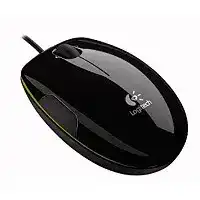
A dead pointer after plugging in the cable does not always mean the hardware has failed. The Logitech LS1 Laser Mouse Driver works with this wired USB model and its laser sensor, wheel click, and side-to-side scrolling functions. Windows or macOS can load standard controls automatically, while Logitech software may add access to supported wheel actions and pointer adjustments.
The LS1 does not use Bluetooth, a wireless dongle, replaceable batteries, or receiver pairing. Its connection comes directly through the attached USB cable. Troubleshooting should therefore begin with the physical port, cable position, operating-system detection, and sensor surface instead of wireless utilities or pairing instructions intended for other Logitech products.
Logitech LS1 Laser Mouse Windows Driver Download
| Driver Name | Description | Supported OS | File Size | Download |
|---|---|---|---|---|
| SetPoint Software 64-bit | Full offline package for configuring mouse buttons, tracking speed, device-specific settings, and status indicators on 64-bit systems. | Windows 11, Windows 10 64-bit, Windows 8 64-bit, Windows 7 64-bit | 80.45 MB | |
| SetPoint Software 32-bit | Complete offline installer for adjusting mouse controls, pointer movement, hot-keys, and compatible device settings on 32-bit systems. | Windows 11, Windows 10 32-bit, Windows 8 32-bit, Windows 7 32-bit | 78.04 MB | |
| SetPoint Smart Installer | Compact installer that downloads the required SetPoint components during setup and requires an active internet connection. | Windows 11, Windows 10 32-bit/64-bit, Windows 8 32-bit/64-bit, Windows 7 32-bit/64-bit | 4.61 MB |
Logitech LS1 Laser Mouse Mac OS Driver Download
| Driver Name | Description | Supported OS | File Size | Download |
|---|---|---|---|---|
| Logitech Options | Customizes mouse buttons, pointer behavior, scrolling actions, shortcuts, gestures, and supported device preferences. | macOS 15, macOS 14, macOS 13, macOS 12, macOS 11 | 238.52 MB | |
| Logitech Control Center | Manages compatible Logitech mouse controls and application-specific button assignments on newer Mac releases. | macOS 11, macOS 10.15, macOS 10.14, macOS 10.13 | 17.76 MB | |
| Logitech Control Center | Provides mouse button configuration and device control for supported Mac OS X versions through the system preferences panel. | Mac OS X 10.13, Mac OS X 10.12, Mac OS X 10.11 | 17.15 MB | |
| Logitech Control Center | Enables basic Logitech mouse customization and model-specific control settings on earlier Mac OS X systems. | Mac OS X 10.11, Mac OS X 10.10, Mac OS X 10.9, Mac OS X 10.8 | 17.06 MB |
The computer shows no response after connection
Disconnect the mouse and insert its plug into another USB port on the computer. Use a direct port during diagnosis rather than a keyboard socket, monitor connection, docking station, or unpowered hub. A shared accessory port may not initialize older USB hardware consistently, even though another low-power device works through the same connection.
Leave the plug disconnected for several seconds before reconnecting it. Windows should play its device sound and create a standard HID mouse entry. When neither action occurs on any port, test the LS1 on another computer. Failure on two systems points toward the cable, plug, or internal circuit rather than a missing software package.
Windows reports an unknown USB device
An incomplete USB record can remain after a port reset, forced shutdown, or interrupted system update. Open Device Manager, locate the failed USB or pointing-device entry, remove it, and restart Windows. Plug the mouse back in after the desktop loads so the operating system can create a new hardware record and install its default input driver.
Check the connector for dirt or a loose metal shell before repeating the test. The plug should sit firmly without needing sideways pressure. A connection that appears only when the cable rests at a particular angle usually indicates physical wear. Driver removal cannot repair a broken conductor or damaged USB connector.
The pointer disconnects when the cable moves
Place the cable loosely across the desk and move the mouse without pulling against the computer. Sharp bends near the body or USB plug can stress internal wires. If Windows repeatedly plays connect and disconnect sounds while the cable shifts, stop reinstalling software and inspect where the interruption occurs.
A different USB port may hide the symptom briefly because the cable sits at another angle. Test with the lead fully relaxed. Intermittent operation at the strain relief normally requires hardware replacement, since cutting, splicing, or opening a moulded mouse cable creates an unreliable repair for an everyday input device.
Install Logitech LS1 Laser Mouse Software Without Conflicts
The Logitech LS1 Laser Mouse Driver is mainly useful when the operating system recognizes the device but leaves supported controls unavailable. Basic left-click, right-click, vertical wheel movement, and pointer control normally begin after the system driver loads. Logitech SetPoint may expose additional adjustments on compatible Windows versions, including wheel behavior and button functions supported by the hardware.
Download the package that matches the operating system and its architecture. Do not install Unifying Software, the Logi Bolt app, G HUB, or receiver connection tools for this corded model. Those programs serve different product families and cannot improve a direct USB connection. They may instead add unnecessary background services and confuse later troubleshooting.
SetPoint installs but does not display the LS1
First confirm that the pointer works through the ordinary Windows driver. Then close SetPoint, unplug the mouse, restart Windows, and reconnect it through a direct USB port. Open the control panel again after Windows finishes recognizing the hardware. SetPoint may miss a device when it starts before the HID record becomes fully available.
If several Logitech programs already run on the computer, remove utilities intended only for newer mice and reboot. Keep the supported legacy package rather than stacking multiple control applications. The LS1 has no gaming profiles, onboard memory, wireless status, or modern application-specific features that would require Logitech’s newer productivity or gaming software.
An older installer refuses to run
Check the operating systems listed beside the download before forcing compatibility options. A legacy SetPoint release may not install correctly on a much newer Windows build, even though the mouse itself still works through native USB support. In that situation, use the system mouse panel for pointer speed, wheel lines, button order, and double-click timing.
When the package officially covers the installed Windows version, clear any unfinished SetPoint installation and run the installer with administrator permission. Restart afterward. Avoid downloading an unidentified executable merely because its filename contains LS1. Standard pointer operation does not justify installing an unverified package from an unrelated driver site.
The mouse works until Windows resumes from sleep
Reconnect the plug once to see whether Windows restores the HID connection. If that works, open the USB hub properties in Device Manager and review power-management behavior. Windows may turn off a hub during sleep and fail to wake an older peripheral on that branch. Try another controller port before changing system-wide power settings.
A complete restart can distinguish a resume fault from permanent hardware damage. When the LS1 returns after every reboot but disappears after sleep, the USB controller or power plan deserves attention. When it remains absent after restarting and fails elsewhere, inspect the cable rather than repeatedly changing sleep options.
Correct Laser Tracking Before Changing Pointer Speed
Laser tracking reacts differently across desk materials, and sensitivity adjustments cannot compensate for every unsuitable surface. The LS1 was built as a wired laser mouse, but highly reflective glass, mirrors, deep transparent coatings, and irregular glossy patterns can still produce erratic movement. A plain mouse pad provides the fastest comparison.
The cursor jumps or moves diagonally
Clean the small sensor opening underneath with a dry, soft swab or gentle air. A strand of hair crossing the laser window can redirect tracking and make the cursor jump in one direction. Do not press into the opening or pour cleaning fluid through it. Wipe the desk as well, since dust beneath the glide feet can tilt the body.
Next, test a matte surface with an even texture. If the pointer becomes accurate immediately, keep that surface and return Windows pointer speed to a moderate level. Raising sensitivity on a poor desk covering often makes every tracking error more visible rather than solving the underlying reading problem.
Movement feels slow despite high sensitivity
Turn off enhanced pointer precision temporarily and compare several Windows speed positions. Acceleration changes the distance according to hand speed, which can feel like hesitation during careful movement and sudden travel during quick movement. The best setting depends on the display size, but extreme values can make a healthy sensor seem inconsistent.
Also check whether the issue occurs only inside one program, remote desktop session, virtual machine, or game. Those environments may apply separate pointer scaling. Test the desktop first. Consistent movement there shows that the USB connection and sensor are functioning, leaving application input settings as the more likely cause.
The pointer freezes for a moment
A brief freeze can come from a loose port, cable interruption, heavy system load, or a surface the sensor cannot read. Watch for a Windows disconnection sound during the pause. No sound suggests tracking or software delay, while repeated USB sounds direct attention toward the plug, port, and cable.
Connect the mouse without a hub and close any program that is consuming most processor or memory resources. Then move the pointer in circles on a plain pad. Freezing that follows a cable bend indicates hardware wear. Freezing limited to one application calls for that program’s input or graphics settings instead.
Restore Wheel Tilt, Middle Click, and Normal Scrolling
The LS1 wheel handles vertical movement and also supports side-to-side scrolling through its tilt action. The Logitech LS1 Laser Mouse Driver may be needed when Windows recognizes ordinary wheel rotation but the horizontal function or assigned wheel command remains unavailable. Hardware wear, debris, and application behavior can still cause symptoms that no software adjustment can correct.
Side-to-side scrolling does nothing
Test the wheel tilt inside a wide spreadsheet, image editor, or document that has a visible horizontal bar. Many web pages fit within the window and provide no sideways area to move, making a working tilt action appear inactive. Press the wheel gently left and right rather than rotating it during the test.
Open SetPoint on a supported Windows installation and confirm that horizontal scrolling has not been replaced by another action. Some programs ignore generic tilt commands or capture them for zooming and navigation. When the function works in one supported application but not another, the difference comes from application handling rather than USB detection.
The wheel scrolls backward or skips lines
Disconnect the mouse and brush loose dust from the gap around the wheel. Rotate it slowly while clearing the opening so trapped debris can move outward. Keep liquids away from the wheel cavity. Cleaning the exterior may restore consistent steps when hair or dust prevents the encoder from reading rotation evenly.
After reconnecting, set a modest number of lines per wheel notch in the operating-system controls. Large values make one missed or reversed signal much more disruptive. If scrolling jumps in every program and on another computer, the internal encoder has probably worn. A driver reinstall will not stabilize a failing mechanical component.
The wheel turns but middle-click fails
Middle-click uses a separate switch beneath the wheel. Confirm the action in a browser by clicking a link or tab with the wheel, then try another program that recognizes a middle button. One application may reserve or disable the command even while physical clicking works elsewhere.
When SetPoint offers a wheel-button assignment, return it to the normal middle-button function. If the click remains absent across two computers while vertical scrolling continues, the switch itself may have failed. Pressing harder can worsen the mechanism and does not provide a lasting repair.
Scrolling changes to zoom unexpectedly
Check whether the Ctrl key remains pressed or mechanically stuck, because many Windows applications interpret Ctrl plus wheel movement as zoom. Tap both Ctrl keys and try scrolling again. Also close keyboard utilities or accessibility tools that may hold a modifier state after a shortcut.
Review the wheel assignment in Logitech software when the behavior appears in every application. Side tilt can also trigger zoom in programs that map horizontal input that way. Resetting the control to its standard scrolling command is safer than altering unrelated browser or document preferences one by one.
Separate Click Timing from Worn Button Switches
Clicks often remain usable long after an older wired mouse develops wheel or cable trouble, yet switch wear eventually creates repeated presses, missed selections, or failed dragging. Software settings can change timing and button order. They cannot rebuild the metal contact inside a worn left or right switch.
One press opens a file twice
Lower the double-click speed in the operating-system mouse panel and use the built-in test area. A setting that demands two extremely fast presses may create confusing results during normal use. However, repeated openings from a single deliberate press usually point to switch bounce rather than an incorrect timing preference.
Confirm the symptom with another USB port and computer. If one physical press repeatedly produces two inputs on both systems, replacing the mouse is the practical answer. Avoid unofficial software that suppresses rapid clicks, since it can delay genuine double-clicks while leaving the damaged switch unchanged.
Dragging releases before the button is lifted
Try selecting text or moving a small window while holding the left button steadily. An interrupted drag on several programs indicates that the switch briefly loses contact. Adjusting pointer speed, changing the laser surface, or reinstalling SetPoint will not correct that electrical break.
Check ClickLock in Windows before judging the result, since that accessibility option changes how dragging starts and ends. Turn it off for a straightforward test. When the held input still drops on another computer, retire the mouse rather than relying on harder pressure that can accelerate wear.
Complete the LS1 check with one direct comparison
Use the Logitech LS1 Laser Mouse Driver only after confirming which functions the operating system already provides. Then compare the device on a second computer with a direct USB port, matte surface, and no extra Logitech utilities running. This single comparison separates local software trouble from faults in the cable, sensor, wheel, or switches.
A healthy LS1 should begin basic operation after USB detection without pairing or wireless preparation. Keep the cable free from sharp bends, clear debris around the laser window and wheel, and use SetPoint only when its additional controls are needed. Persistent failure on two computers gives a stronger answer than another round of driver changes.