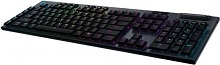
When G HUB opens but the keyboard stays missing, inactive, or stuck on the wrong profile, the Logitech G915 Driver is mainly tied to G HUB, LIGHTSPEED communication, firmware, programmable G-keys, and LIGHTSYNC control. The G915 is a full-size low-profile mechanical gaming keyboard with LIGHTSPEED wireless, Bluetooth, rechargeable operation, dedicated media controls, five programmable G-keys, and onboard profiles. Those features create several different failure points, so a typing problem does not always mean the wireless link has failed.
Logitech G915 Windows Driver Download
| Driver Name | Description | Supported OS | File Size | Download |
|---|---|---|---|---|
| Logitech G HUB Software | Provides G HUB controls for configuring keyboard lighting, key assignments, macros, profiles, and other supported device settings. | Windows 11, Windows 10 32-bit/64-bit | 67.75 MB | |
| G HUB Installer | Installs Logitech G HUB for managing compatible gaming keyboard features and personalized hardware configurations. | Windows 8 32-bit/64-bit, Windows 7 32-bit/64-bit | 39.22 MB |
Logitech G915 Mac OS Driver Download
| Driver Name | Description | Supported OS | File Size | Download |
|---|---|---|---|---|
| Logitech G HUB Software | Offers G HUB customization for compatible keyboard lighting, commands, profiles, macros, and device preferences. | macOS 26, macOS 15, macOS 14 | 12.43 MB | |
| Logitech G HUB Software | Supplies Logitech gaming-device configuration tools for adjusting supported keyboard functions and profile settings. | macOS 13 | 10.43 MB | |
| G HUB Installer | Sets up G HUB on supported Mac systems for configuring compatible Logitech gaming keyboard features. | Mac 15, Mac 14, Mac 13, Mac 12 | 6.18 MB | |
| G HUB Installer | Installs the G HUB application for keyboard assignments, lighting controls, and supported gaming-device profiles. | Mac 11 | 5.02 MB | |
| G HUB Installer | Adds Logitech G HUB support for compatible gaming hardware and its configurable keyboard functions. | Mac 10.15 | 5.04 MB | |
| G HUB Installer | Provides the G HUB setup package used to access supported Logitech gaming keyboard controls and preferences. | Mac 10.14 | 5.17 MB | |
| G HUB Installer | Installs Logitech G HUB for managing compatible keyboard profiles, lighting behavior, and programmable controls. | Mac 10.13 | 4.93 MB |
Logitech G915 Driver When G HUB Does Not See the Keyboard
G HUB detection is worth solving before changing lighting, macros, or onboard profiles. If the G915 types normally but its tile never appears in G HUB, disconnect and reconnect the LIGHTSPEED receiver, then try a direct USB connection on the computer. Hubs, KVM switches, and some docks can pass ordinary keyboard input while interfering with device detection or media functions.
G HUB shows the keyboard as inactive
An inactive G915 tile can appear when the software loses contact with the LIGHTSPEED receiver after sleep, a USB change, or an application update. Switch the keyboard off, reconnect the receiver, launch G HUB again, and power the keyboard back on. If it remains inactive, connect the charging cable directly to the computer and see whether G HUB recognizes the keyboard through USB.
Changing to another direct USB port is also useful because it separates a software problem from a port or hub problem. If Windows detects the keyboard and G HUB still does not, restart G HUB before reinstalling anything. Current G HUB releases include fixes for application loading and device-detection problems, so an outdated installation can complicate diagnosis.
G HUB stays on its loading screen
Sometimes the keyboard is not the actual problem. G HUB itself can hang while starting, especially after an update or system sleep. Close the application completely and launch it again. If the program continues to stall, use its repair or reinstall option rather than repeatedly removing the G915 from Windows. A functioning keyboard that disappears only inside G HUB points toward the application layer.
The Logitech G915 Driver configuration should become visible once G HUB detects the keyboard properly. At that point, confirm that the application can display battery information, assignments, and LIGHTSYNC controls before spending time rebuilding profiles.
LIGHTSPEED and Bluetooth Behave Differently
The G915 offers dedicated buttons for LIGHTSPEED and Bluetooth connections. That makes switching computers convenient, but it can also cause confusion when the keyboard suddenly appears to stop responding to the expected machine. Check which connection button is active before resetting software. Pressing the LIGHTSPEED button returns the keyboard to its USB receiver, while the Bluetooth button selects the paired Bluetooth device.
Typing works over Bluetooth but G HUB controls disappear
For gaming configuration and firmware work, use the LIGHTSPEED receiver or a supported USB connection rather than assuming Bluetooth will expose every G HUB function in the same way. Bluetooth can carry normal keyboard input while the software-facing gaming features depend on the connection used. If assignments or lighting controls vanish after switching modes, return to LIGHTSPEED and reopen G HUB.
LIGHTSPEED drops out for a few seconds
Short wireless interruptions deserve a physical connection test before a software reset. Plug the receiver directly into the computer and keep it away from crowded USB hubs and other radio devices. If the receiver sits behind a metal desktop chassis, using the supplied extension arrangement to place it in a clearer position can improve the wireless path without changing any keyboard configuration.
Test LIGHTSPEED again with Bluetooth temporarily out of the troubleshooting path. If the G915 remains steady when the receiver has a clearer position, leave the software alone. If disconnects continue even at close range, check G HUB for firmware availability and test another USB port.
Firmware, Profiles, and G-Key Assignments
The G915 stores profiles and provides dedicated M1, M2, and M3 mode controls along with five G-keys on the left side. This makes it possible for the keyboard to behave differently even though no hardware fault exists. A macro assigned under one profile may disappear after a game profile, memory slot, or onboard mode becomes active.
G1 to G5 macros stop working in a game
First check which G HUB profile is active. Automatic game detection can switch away from the desktop profile where the macro was created. If the correct profile is active but a macro fails only inside a game running with administrator privileges, run G HUB at the same privilege level. G HUB macros may fail when the game and the control software operate at different privilege levels.
Do not test a failed macro only inside one game. Assign a harmless keystroke and check it in another suitable application. If the G-key works there, the physical key and G915 connection are functioning, and the problem is more likely tied to the game profile, permission level, or original macro sequence.
Onboard memory loads the wrong LIGHTSYNC effect
One recurring G915 frustration involves creating a lighting effect in software mode and expecting it to appear automatically after switching to onboard memory. Create the desired compatible effect first, save it to an available device effect slot, and then associate the intended profile with an onboard memory slot. Some G HUB lighting effects behave differently when the application is no longer controlling them live.
If a memory slot keeps recalling an older effect, restore that onboard slot to its default state and copy the new profile again. Also check M1, M2, and M3 because changing memory modes can make the keyboard appear to ignore a newly saved configuration when it is actually recalling another slot.
Lighting changes after inactivity
Brightness reduction or a different effect after the keyboard sits untouched may come from the G915 power-saving configuration rather than a corrupt profile. Set the inactivity behavior while software control is active, then update the onboard profile if you intend to run without G HUB. This is safer than altering G HUB configuration files manually.
For the Logitech G915 Driver and G HUB combination, treat firmware and profile changes separately. Finish any offered firmware update before diagnosing an onboard-memory problem, then reconnect the keyboard and receiver normally. Interrupting firmware work or mixing several profile changes into the same test makes it much harder to identify what actually fixed the behavior.
Charging and Battery Readings Can Be Misleading
The G915 contains a rechargeable battery and can operate while charging through USB. If it works while plugged in but shuts down shortly after the cable comes out, focus on charging before changing wireless profiles. Try the original cable or another known working data and charging cable, connect directly to the computer or a suitable USB power source, and allow the battery time to charge.
Battery percentage jumps after unplugging the cable
G HUB battery readings can occasionally appear inconsistent immediately after changing between wired and wireless operation. Power-cycle the keyboard and reconnect it through LIGHTSPEED, then allow G HUB to refresh its reading. If the percentage repeatedly collapses after a long charge, test another cable and USB source. A cable fault can imitate a worn battery because the keyboard may remain powered without charging normally.
The keyboard refuses to charge
Inspect the cable connection at the keyboard for a firm fit and compare with another compatible micro-USB cable. If one cable charges correctly and another only powers the keyboard intermittently, the cable is the simpler fault to address. Avoid repeatedly reinstalling G HUB when the charging indicator and battery behavior change with the cable itself.
A direct computer connection also matters during troubleshooting. Disconnect unnecessary hubs or switches while testing. Once charging behaves normally, reconnect accessories one at a time. This makes it easier to spot a USB path that supplies inconsistent power or interferes with G HUB communication.
Keys, Volume Control, and Lighting Hardware Symptoms
Software cannot correct every G915 problem. Repeated characters, an unreliable volume roller, or damaged keycap legends may continue regardless of the active profile. Separate those symptoms from G HUB first, because repeatedly rebuilding assignments can hide a straightforward mechanical problem.
A key types twice from one press
Key chatter has been reported on G915 keyboards, often affecting only one or two frequently used keys. Test the suspect key in several applications and over both LIGHTSPEED and a wired connection. If the same key repeatedly produces duplicate characters regardless of connection method, the evidence points more strongly toward the switch or key mechanism than the wireless software.
With the keyboard powered off, remove loose debris around the affected key using gentle dry cleaning methods. Do not flood the switch with cleaning fluid or dismantle the board as an initial fix. If double entries persist on another computer, especially outside G HUB, consider warranty or hardware service rather than using software workarounds to suppress valid keystrokes.
The volume roller or media controls stop responding
The G915 includes a dedicated aluminum volume roller plus media buttons. If ordinary typing works but those controls do nothing, power-cycle the keyboard and test it with the receiver connected directly to the computer. USB switches and attached peripherals have caused media-control conflicts even while standard keys continued to operate.
Try the volume roller without a KVM or multi-device hub. If it works when attached directly, investigate the intermediate USB hardware rather than resetting every G915 profile. If the roller fails through LIGHTSPEED, Bluetooth, and a direct computer connection, the symptom becomes more consistent with a keyboard-side fault.
Key legends or keycaps show physical wear
Lighting configuration cannot repair worn coating or damaged keycaps. The original G915 uses low-profile keycaps, and replacement compatibility is more restrictive than with many conventional mechanical keyboards. Avoid forcing generic mechanical keycaps onto the switches. If a cap has cracked, loosened, or lost its surface finish, look for parts specifically intended for the original G915 rather than the newer G915 X.
Use the Logitech G915 Driver primarily for G HUB detection, LIGHTSYNC configuration, G-key assignments, onboard profiles, and supported firmware management. When the problem follows one switch, one keycap, or the volume roller across different computers and connection modes, continuing to reset software rarely changes the result. Connection tests, profile checks, charging tests, and hardware isolation give a much clearer answer about where the fault actually sits.