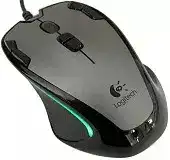
Windows may recognize the clicks while leaving the pointer motion or programmable controls unavailable. In that situation, the Logitech G300 Gaming Mouse Driver combines the normal USB input connection with Logitech Gaming Software for profiles, sensitivity levels, lighting colors, and button assignments. The G300 is a wired optical gaming mouse, so it needs no receiver, wireless pairing tool, Bluetooth entry, or battery check.
The mouse can begin working as soon as its cable reaches a powered USB port. Its three factory profiles also operate without extra configuration. Software becomes necessary when you want different DPI stages, game-specific commands, report rates, profile colors, or assignments for the nine controls.
Logitech G300 Gaming Mouse Windows Driver Download
| Driver Name | Description | Supported OS | File Size | Download |
|---|---|---|---|---|
| Logitech Gaming Software 64-bit | Full 64-bit package for configuring mouse buttons, tracking sensitivity, profiles, macros, and game-specific commands offline. | Windows 11, Windows 10 64-bit | 119.96 MB | |
| Logitech Gaming Software 64-bit | Complete 64-bit installer for managing programmable controls, pointer speed, onboard profiles, and application-specific mouse settings. | Windows 10 64-bit, Windows 8 64-bit, Windows 7 64-bit | 120.04 MB | |
| Logitech Gaming Software 32-bit | Offline 32-bit software package for assigning mouse functions, adjusting tracking performance, creating profiles, and setting gaming hot-keys. | Windows 10 32-bit, Windows 8 32-bit, Windows 7 32-bit | 109.04 MB |
Logitech G300 Gaming Mouse Mac OS Driver Download
| Driver Name | Description | Supported OS | File Size | Download |
|---|---|---|---|---|
| Logitech Gaming Software | Provides mouse button assignments, sensitivity adjustments, gaming profiles, macros, and device-specific configuration on supported macOS systems. | macOS 10.15, macOS 10.14, macOS 10.13, macOS 10.12 | 204.99 MB | |
| Logitech Gaming Software | Supports programmable mouse controls, pointer response settings, stored profiles, and customized commands for compatible Mac computers. | Mac OS X 10.11, Mac OS X 10.10, Mac OS X 10.9, Mac OS X 10.8 | 201.98 MB |
Clicks respond but the pointer stays still
Disconnect the G300 and restart the computer before changing its profiles. Plug the cable into another powered port on the computer itself, then wait for Windows to finish identifying the device. A keyboard socket, monitor hub, or low-power extension can provide an incomplete connection even though one or two buttons appear to respond.
Test the optical sensor on a plain, opaque mouse pad. Glass, polished material, and strongly reflective surfaces can make pointer movement fail while clicks remain normal. Check the sensor opening for hair or loose dust, but do not push tools into it. When the same mouse tracks normally on another computer, concentrate on the first computer’s USB and input-device configuration.
Windows reports a USB or Code 10 error
Open Device Manager and inspect the mouse and Human Interface Device sections. Remove only the failed or duplicated G300-related entry, unplug the cable, and restart Windows. Reconnect it after the desktop appears so the operating system can rebuild its standard USB input record.
A recurring error across several ports can come from the cable, plug, or internal connection. Gently position the cable near the front of the mouse while watching Device Manager. Repeated disconnect sounds during light movement suggest a physical cable fault rather than a missing profile package.
Use Logitech G300 Gaming Mouse Software Instead of SetPoint
The Logitech G300 Gaming Mouse Driver should be installed through Logitech Gaming Software when advanced controls are required. The original setup guide specifically states that the G300 does not work with SetPoint. Installing several Logitech control programs does not add compatibility and may make it harder to identify which application owns the device.
Logitech Gaming Software cannot find the G300
Close the software, connect the mouse directly to the computer, and launch the application again. If detection still fails, restart Windows with the G300 attached. Older Gaming Software releases sometimes need administrator permission to finish their device service installation, especially after a Windows upgrade or a migration from another Logitech mouse.
Remove SetPoint when it was installed only for the G300. Then repair or reinstall Logitech Gaming Software and reboot before checking detection. Do not select a G300s package merely because the names look similar. The G300 and G300s belong to the same design family, but the page should use software listed for the exact device and operating system whenever it remains available.
The application opens but changes do not reach the mouse
First check which operating mode Logitech Gaming Software shows. Onboard-memory mode writes compatible commands into the mouse. Automatic game detection keeps profiles on the computer and changes them when the matching program starts. Editing one mode while using the other makes the saved changes appear to do nothing.
Apply one obvious test assignment, such as a keyboard letter, to a top button and save it. Test that command outside the game. When it works on the desktop but not inside the game, the game profile, permission level, or input rules need attention rather than the USB connection.
Separate Profile Switching from DPI Switching
The G300 contains three preconfigured onboard profiles for MMO play, first-person games, and ordinary productivity tasks. Red, green, and blue illumination identifies those factory profiles. Button G8 rotates through them, while other buttons can raise, lower, loop, or temporarily shift DPI according to the active profile.
The light changes and every button suddenly behaves differently
An accidental press on G8 may select another stored profile. That changes several controls at once, which can look like corrupted software. Press the profile button again and watch the illumination color. Return to the color associated with the intended configuration before editing individual commands.
For a permanent correction, open Logitech Gaming Software and remove profile switching from a button that you press by mistake. Keep another accessible method for selecting profiles, or store similar basic click commands in every slot. This avoids losing ordinary navigation while moving between game layouts.
Sensitivity jumps during a game
The factory gaming profiles include several DPI values, and their G6, G7, or G9 assignments may change sensitivity. A button pressed during a tense movement can therefore make the pointer feel suddenly slow or excessively fast. Review every DPI-related assignment in the active profile instead of adjusting Windows pointer speed to compensate.
Choose two or three useful sensitivity stages rather than keeping values you never use. Set one as the default level so the mouse returns to a predictable speed after a profile change, computer restart, or wake event. The original profiles use 1000 DPI as their default, but a custom profile can use a different supported value.
The intended game profile never activates
Automatic game detection depends on the executable path saved in Logitech Gaming Software. A launcher, game update, or moved installation folder can leave that path pointing to an old file. Open the profile properties and associate the profile with the executable that remains active while the game is running.
Run the control software and game at comparable permission levels. A game started as administrator may not accept simulated key commands from a utility running with ordinary permission. Avoid granting elevated access without need, but keep both applications at the same level during diagnosis.
Recover Missing Commands Without Rebuilding Every Profile
Nine controls give the G300 more assignment choices than a standard three-button mouse, yet games do not always recognize every control as a separate mouse button. Logitech Gaming Software can translate the extra controls into keyboard commands, macros, media actions, or standard back and forward functions.
A game ignores G6, G7, G8, or G9
Assign the required in-game keyboard key to the mouse button rather than waiting for the game to identify a high-numbered mouse input. Save that assignment inside the profile linked to the game. Then bind the same keyboard key within the game’s own control menu.
Keep profile switching away from any control needed by the game. G8 performs profile rotation in the original configuration, so pressing it may change the whole layout instead of sending an action. Replace that assignment when the title needs all available top buttons.
Back and forward controls work in one program only
The factory profiles assign G4 and G5 as back and forward, but individual programs decide whether they accept those commands. Test them in a web browser and File Explorer. Success there confirms the switches and profile assignment, even when a particular game or specialist application ignores browser-style navigation.
Map the buttons to explicit keystrokes for programs that do not understand back and forward mouse events. Use separate application profiles when the same button needs different behavior in a browser, an editor, and a game. One global assignment cannot match every program’s command scheme.
Onboard profiles disappear on another computer
Only changes written to onboard-memory mode travel with the G300. Profiles stored under automatic game detection remain with the local Logitech Gaming Software installation. Switch to onboard mode, choose the required slot, and save a compact profile before moving the mouse to another computer.
Some software-driven actions may not fit onboard operation. Replace complicated macros with direct keystrokes where portability matters. Close Logitech Gaming Software after saving, then test the profile. That check reveals whether the mouse actually retained the assignments or was still relying on the running application.
Deal with Wheel, Click, and Cable Symptoms as Hardware Tests
Profile software can change what a control sends, but it cannot repair worn switches, a damaged wheel encoder, or an intermittent cable. Restore ordinary left click, right click, and middle click assignments before judging the hardware. This removes macros and unusual commands from the test.
One press produces two clicks
Set the primary button to a standard click and test it with Logitech Gaming Software closed. Also check the operating system’s double-click speed, since an unsuitable value can make normal clicking feel inconsistent. Repeat the test on another computer without importing any custom profile.
Double clicks that follow the mouse to another system usually indicate switch wear. Avoid scripts that suppress rapid input, because they can delay legitimate clicks during games. Do not open the casing while warranty coverage remains useful. Replacement or qualified switch service provides a better long-term answer than software filtering.
The wheel skips, reverses, or misses middle clicks
Try the wheel in several applications before changing the driver package. Remove loose debris around the wheel with gentle air while the cable is disconnected. Do not pour liquid into the wheel opening. Erratic direction in every program and on another computer points toward encoder wear.
A missing middle click can also come from the active profile. Restore G3 to the standard middle-button action and test again. When scrolling remains accurate but pressing the wheel fails under a default assignment, the wheel switch needs hardware attention rather than another Logitech Gaming Software installation.
The mouse disconnects when the cable moves
Connect the G300 without an extension or hub and listen for USB disconnect sounds while lightly changing the cable position. Do not pull or sharply bend the lead. A repeatable failure near the plug or mouse body exposes a cable problem that profile changes cannot solve.
Once detection, DPI stages, profile colors, and all nine controls behave as expected, keep a copy of the working configuration. The Logitech G300 Gaming Mouse Driver can then be reinstalled after an operating-system change without guessing which sensitivity values or button commands were previously active. Preserve both the software profiles and a practical onboard layout, since they solve different needs.