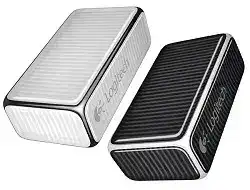
When a tiny presentation mouse scrolls by touch but suddenly refuses to move the pointer, the Logitech Cube Driver is mainly useful for restoring the wireless link, charging behavior, and smooth swipe scrolling. The Cube is not a Bluetooth mouse and it is not a standard wheel mouse. It works through a Logitech Unifying USB receiver, charges through a micro USB cable, and changes role when lifted for presentation use.
That unusual design makes the troubleshooting different from larger Logitech mice. There is no AA battery to swap, no side-button layout to remap, and no mechanical scroll wheel to clean. Most failures come from a drained internal battery, a receiver that is not talking to the device, touch scrolling software that is missing, or confusion between mouse mode and presenter behavior.
Install the Logitech Cube Driver only after confirming the Cube has power and the Unifying receiver is attached directly to the computer. The software cannot repair a completely flat battery or a receiver plugged into a weak hub. It can, however, help the computer recognize the Cube properly and support the scrolling behavior that makes this model different.
Logitech Cube Windows Driver Download
| Driver Name | Description | Supported OS | File Size | Download |
|---|---|---|---|---|
| Flow Scroll Smart Installer | Small installer for Flow Scroll setup, with internet required during installation. | Windows | 3.91 MB | |
| Flow Scroll Full Installer | Full Flow Scroll package for offline setup and smooth scrolling support. | Windows | 17.38 MB | |
| SetPoint Smart Installer | Compact SetPoint installer for mouse button settings and device-specific controls. | Windows | 3.5 MB | |
| SetPoint Full Installer 32-bit | Offline SetPoint package for 32-bit Windows with tracking speed and hot-key settings. | Windows 32-bit | 75.81 MB | |
| SetPoint Full Installer 64-bit | Offline SetPoint package for 64-bit Windows with battery status and device options. | Windows 64-bit | 77.85 MB | |
| Unifying Software | Utility for pairing the Logitech Cube with a compatible Unifying receiver on Windows. | Windows | 3.95 MB |
Logitech Cube Chrome OS Driver Download
| Driver Name | Description | Supported OS | File Size | Download |
|---|---|---|---|---|
| Unifying Software | Chrome utility for connecting Logitech Cube through a compatible Unifying receiver. | Chrome OS | 52.57 KiB |
Start With the Cube’s Power State, Not the Pointer
The Cube can look faulty when it is simply off or out of charge. Slide the power switch to the on position and check the indicator behavior near the charging area. If the red low-power warning appeared earlier, charge the Cube before testing software. A very low rechargeable battery may not give enough power for pairing or touch scrolling.
Charging starts but the Cube still will not wake
Use a direct USB charging source and leave the Cube connected long enough to recover from a deep drain. This model can take up to about one and a half hours to reach a full charge, so a two-minute test may be misleading. If the device has been stored for a long time, give the battery a proper charge before judging the receiver or driver.
A loose micro USB cable can also make charging appear unreliable. Try a cable that fits firmly and avoid charging through an unpowered keyboard port or a weak adapter. When the Cube finally wakes, test pointer movement before opening any software. That separates a charging fault from a recognition fault.
The on switch is active but nothing moves
The Cube has a compact shape, so it is easy to hold it in a way that does not behave like a normal mouse. Place it flat on the desk and move the whole device to control the pointer. Press the main surface for a left click and use the secondary click area only after basic movement works.
If lifting the Cube changes the behavior, remember that this is part of the design. The device can act as a presentation controller when raised. Put it back on a flat surface and test again in a normal desktop window before changing settings.
Fix the Unifying Receiver Before Changing Scroll Software
The Cube depends on its Unifying receiver for the wireless connection. If the receiver is missing, mismatched, damaged, or connected through an unreliable USB path, the Logitech Cube Driver may open normally while the device still fails to respond. Use a compatible Unifying receiver and keep it plugged into a direct computer port during pairing and testing.
Do not treat the Cube as a Bluetooth device. It will not appear in the Bluetooth list because its confirmed connection method is the Logitech Unifying USB receiver. Searching for it in Bluetooth settings only adds confusion and can lead to unnecessary system changes.
Receiver plugged in but the Cube is not found
Move the Unifying receiver to another USB port and test again. If it was connected through a monitor, dock, switch box, or passive hub, plug it straight into the computer. Small receivers can appear present to the operating system while the wireless signal path remains poor enough for the Cube to miss pairing or drop movement.
After changing the port, turn the Cube off and back on. Then open the Logitech Unifying pairing utility and follow the pairing screen. The Cube must be awake during that short pairing window, so do not let it sit idle while the utility waits for the device.
A replacement receiver does not connect
A replacement must be a Logitech Unifying receiver, not just any small Logitech USB dongle. The Cube was built for the Unifying system, so the pairing tool needs a receiver from that family. If the utility cannot see the receiver at all, solve that USB recognition problem first.
If the receiver appears in the pairing utility but the Cube does not, charge the Cube again and repeat the pairing from a fresh power cycle. Keep the device close to the receiver during this step. Distance is rarely the only problem, but close placement removes one variable while the utility tries to bind the two devices.
Receiver works on one computer but not another
This usually points to the computer side rather than a failed Cube. Try a different USB port, restart with the receiver already inserted, and check whether the system shows any blocked or disabled USB input device. On a work computer, security policies can also limit unknown USB receivers, so test on a personal machine when possible.
Touch Scrolling Needs the Right Expectation
The Cube scrolls when you swipe a finger along the main panel. It does not use a raised scroll wheel, so wheel-cleaning advice for normal mice does not fit this model. If pointer movement and clicking work but pages do not scroll, focus on the touch surface, the scroll software, and the application being tested.
The Logitech Cube Driver can support the scroll experience, but scrolling may still vary between browsers, documents, and older programs. Test with a simple web page and a document window. If one program scrolls while another ignores the swipe, the Cube is sending input and the application is the part that needs attention.
Swipe scrolling feels delayed or uneven
Clean the top touch surface with a dry microfiber cloth and remove oil from your finger before testing again. The Cube reads a swipe on a very small surface, so a greasy panel or too-short finger motion can look like broken scrolling. Use a clear upward or downward swipe rather than a tap.
If the movement improves after cleaning, do not reinstall software. Keep the surface clean and adjust the scrolling speed in system mouse preferences if the page moves too quickly or too slowly. Software changes help less when the touch panel is simply reading a poor gesture.
Scrolling works only after unplugging the receiver
A receiver reset can temporarily refresh the input session, but it should not become the normal fix. Move the receiver to a different direct USB port and restart the computer once with the receiver already connected. Then test scrolling before opening several browser tabs or presentation software.
If the problem returns after sleep, wake the computer fully before using the Cube. Some systems restore keyboard and trackpad input before they restore every USB receiver. Waiting a few seconds, then moving the Cube on a flat surface, can prevent repeated unplugging that may loosen the receiver over time.
Presentation Mode Can Be Mistaken for a Fault
The Cube has a second purpose: when lifted, it can work as a presenter. That is useful in meetings, but it also creates a strange symptom for someone expecting a normal mouse at all times. The pointer may stop behaving as expected when the device is raised because the Cube is no longer being used in its desk position.
Slides respond but the desktop pointer does not
Put the Cube back on the desk and test it outside the slide program. If the pointer returns, the device is switching role as intended. Close the presentation app and confirm left click, secondary click, and swipe scrolling in a normal window before changing receiver settings.
If presentation actions work but desktop movement never returns, power-cycle the Cube and reinsert the receiver. The goal is to restart both sides of the connection without changing unrelated mouse preferences. After that, test the Cube flat on the desk before lifting it again.
Clicking feels different from a regular mouse
The Cube’s shape changes how clicking feels. Press the surface deliberately and keep the device steady while clicking. If your hand moves the Cube during the press, the pointer may shift at the same moment, making the click look inaccurate. This is a handling issue more often than a driver fault.
For secondary click trouble, check the system mouse preference for right-click behavior and test in a plain desktop area. Avoid testing only inside a slide deck or browser tab, because those programs can assign their own actions to clicks and gestures.
Software Choice for an Older Logitech Design
The Cube came from a period when Logitech used separate utilities for Unifying pairing and smooth scrolling support. Newer Logitech apps may not treat every older specialty device the same way. For this model, the important pieces are Unifying receiver pairing and the touch-scroll component, not gaming profiles or modern multi-device features.
If the Logitech Cube Driver package you use does not detect the device, do not install several Logitech tools at once. Remove failed utility versions, restart, and install the one meant for Unifying pairing or Cube scrolling. Too many overlapping control apps can leave the receiver paired while the scroll layer still behaves poorly.
Driver installed but the Cube still acts generic
A generic system mouse profile may allow basic movement and clicking while missing the intended scroll feel. Recheck that the Cube appears through the receiver utility and that the scroll software is installed for the operating system you are using. If the software is too old for a newer system, rely on basic pointer functions and test scrolling through system settings.
For older computers, the original scroll utility may give a better result than a modern all-purpose app. For newer computers, compatibility may be limited by the age of the Cube software. Keep the setup minimal: one receiver utility, one scroll component when needed, and no unrelated gaming or keyboard package.
Keep the Cube Working Like a Pocket Presenter Mouse
The Cube needs a different maintenance habit from a full-size wireless mouse. Charge it before travel, keep the Unifying receiver with the device, avoid Bluetooth setup paths, and test it flat on the desk before assuming presenter mode has failed. The Logitech Cube Driver should be the software layer, not the first fix for every power or receiver problem.
If the Cube stops during a meeting, plug in the receiver directly, confirm the device has charge, and test one slide action before opening extra software. If it fails at the desk, test pointer movement, clicking, and swipe scrolling separately. Treat those as three different signals, because each one points to a different cause.
The best long-term setup is simple: a charged Cube, a known compatible Unifying receiver, a direct USB connection, and only the Logitech utilities needed for pairing and touch scrolling. That keeps this unusual mouse from being buried under fixes meant for Bluetooth mice, wheel mice, or gaming devices.