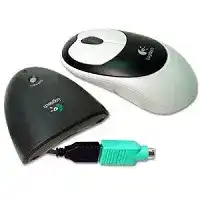
A cursor that appears once and then freezes usually points to the wireless link before it points to Windows itself. The Logitech Cordless Mouse Driver is useful when the computer detects a Logitech input device, but the cordless mouse still will not move, reconnect, scroll properly, or keep its button settings after restart.
This page treats the Logitech Cordless Mouse as an older USB receiver wireless mouse, not a Bluetooth mouse. That detail matters because the fix starts with receiver detection, battery contact, SetPoint-style control software, and channel synchronization. Bluetooth menus, Bolt pairing, and modern multi-device switching do not belong in this repair path unless your exact bottom label proves a different model.
Many older Logitech cordless mice can still work through normal operating system mouse support. The driver or Logitech software becomes important when the receiver and mouse lose their match, the wheel behaves like a plain two-button mouse, or the control panel cannot find the device. Work through the hardware link first, then repair the software layer.
Logitech Cordless Windows Driver Download
| Driver Name | Description | Supported OS | File Size | Download |
|---|---|---|---|---|
| Logitech MouseWare for Windows | Provides classic Logitech cordless mouse settings and basic pointer control support for Windows systems. | Windows | 4.07 MB |
Logitech Cordless Mac OS Driver Download
| Driver Name | Description | Supported OS | File Size | Download |
|---|---|---|---|---|
| Logitech Control Center for Mac | Adds cordless device customization, button assignments, scrolling behavior, and Mac-specific control options. | Mac OS X 10.13.x | 16.63 MB | |
| Logitech Control Center for Mac | Supports Logitech cordless mouse configuration with device settings and preference controls on compatible Mac systems. | Mac OS X 10.11.x | 17.06 MB | |
| Logitech Control Center for Mac | Enables Mac OS X cordless mouse adjustments, including button behavior and model-specific control panel settings. | Mac OS X 10.7.x | 17.73 MB | |
| Logitech Control Center for Mac | Installs older Mac support for Logitech cordless device setup, control access, and mouse preference tuning. | Mac OS X 10.5.x | 18.7 MB | |
| Logitech MouseWare for Mac | Provides legacy Logitech cordless mouse support for Mac systems that use the older MouseWare package. | Mac OS | 3.75 MB |
Receiver First, Software Second
Install attempts often fail because the receiver has not created a steady wireless path yet. Plug the receiver directly into the computer, avoid a crowded hub, and let the operating system finish adding the USB input device. Then turn the mouse on and press the connect button on the underside if your unit has one.
If the mouse came as part of a desktop set, keep the original receiver with the original mouse. Older cordless receivers do not always accept a random replacement. Some units need Logitech’s connection utility or SetPoint connection process to rebuild the match, while others only reconnect to the receiver supplied with that package.
When Windows sees USB but the pointer does not move
Open Device Manager only after the receiver has been moved to a direct USB port and tested again. A receiver can appear as a normal Logitech USB input device even when the mouse has not synchronized with it. Remove the stale input entry, restart, and let Windows detect the receiver again before pressing the mouse connect button.
Do not install several driver tools during this test. A simple reconnect gives a clearer result than a stack of mouse utilities running at the same time. If the pointer starts moving after the restart, install the Logitech Cordless Mouse Driver package only for the controls that still need software support.
Lost receiver confusion
A common mistake is assuming every Logitech receiver works with every cordless mouse. It does not. Unifying receivers work only with products that support that receiver family, and older cordless mice may use a different receiver type entirely. Check the label on the receiver and mouse before buying a replacement.
If the replacement receiver does not match the mouse family, the computer may still detect the USB plug while the mouse remains silent. That looks like a driver issue, but the real problem is receiver compatibility. In that case, software cannot create support that the hardware never had.
Battery Contact Problems That Look Like Driver Failure
Older cordless mice often fail at the battery bay before they fail at the driver. Remove the cells, check the direction marks, and clean the metal contacts with a dry cloth. Use batteries from the same pack, not one old cell and one newer cell, because uneven voltage can make the mouse disconnect under movement.
The mouse wakes only after tapping it
If the pointer returns when you tap the mouse or squeeze the shell, the battery connection needs attention. Reseat the batteries firmly and check whether the spring contacts still press against the cell ends. A weak contact can break power for a split second, which forces the receiver to wait for the mouse again.
After reseating the batteries, leave the receiver in the same USB port and test movement for a few minutes. Changing the receiver, software, and batteries at the same time makes the fault harder to read. Fix the power path first because no driver can hold a wireless connection without stable power.
Slow wake after the computer sleeps
A short wake delay can happen with older cordless hardware, but a long delay suggests weak batteries or USB power saving. Replace the batteries and restart the computer with the receiver already plugged in. If the mouse wakes better after that, the driver was not the main fault.
On laptops, USB power saving can also delay the receiver after sleep. Try another direct USB port, especially one that stays powered more consistently. For a desktop, test a front port and a rear port because case layout can change the radio path and power behavior.
SetPoint Detection and Control Panel Errors
Older Logitech cordless mice usually depend on SetPoint-era software for extra control, especially when the operating system loads only a plain mouse profile. The Logitech Cordless Mouse Driver should match that older software path. Newer Logitech apps may ignore the device or offer fewer controls because they target later receiver families.
SetPoint opens but shows no mouse
When SetPoint opens without listing the mouse, unplug the receiver, uninstall the Logitech mouse software, restart, and then plug the receiver back in before reinstalling. This order clears the old device profile and gives the installer a fresh USB input entry to attach to.
If the mouse belongs to a keyboard and mouse bundle, install the software package that matches the set rather than a random standalone mouse page. Combo receivers can expose both keyboard and mouse functions, and mismatched software may detect only part of the set.
Old MouseWare and SetPoint overlap
Some older systems still carry MouseWare entries from previous Logitech pointing devices. Remove the older utility before installing SetPoint for the cordless mouse. Two Logitech control layers can fight over wheel assignments, middle-click behavior, and pointer speed, even when the basic cursor still moves.
After cleanup, restart before testing the mouse. A restart matters because old driver services can remain active until Windows reloads the input stack. Then open the Logitech control panel and check one setting at a time instead of changing every button and wheel option immediately.
Windows works, but custom controls disappeared
Basic pointer movement does not prove that the full Logitech software profile loaded. If the scroll wheel works but custom wheel or button assignments are gone, reinstall the matching Logitech control package and confirm that the device appears by name. Use Windows mouse settings only for speed and click timing when the Logitech panel cannot see the model.
The Logitech Cordless Mouse Driver should add the missing control layer, not replace every part of Windows input handling. If the mouse works perfectly without extra assignments, keep the setup simple and avoid changing software unless a control actually fails.
Cursor Dropouts, Desk Position, and Radio Noise
Radio problems can look like bad tracking. If the pointer stalls when the receiver sits behind a metal desktop tower, change the receiver position before changing drivers. A cordless mouse needs a clear enough path between the desk surface and the receiver, especially with older 2.4 GHz or legacy cordless hardware.
The pointer skips in one corner of the desk
Move the receiver to a port with a clearer line from the mouse area. Large speakers, metal monitor stands, docking stations, and thick desktop cases can weaken the wireless path. You do not need an elaborate setup; a simple USB extension can place the receiver where the mouse signal reaches it more consistently.
Also test the surface. A glossy desk, glass top, or patterned pad can make the sensor misread movement. Put the mouse on a plain matte pad and check whether the pointer steadies before you assume the Logitech software has failed.
Scrolling works, then stops during long sessions
Wheel stoppage during use can come from dirt around the wheel, weak batteries, or software losing the device profile. Spin the wheel firmly but gently, clear dust around the wheel opening, and test the scroll in a long page. If scrolling returns only after reconnecting the receiver, return to the receiver and power checks.
If the wheel still feels wrong after hardware checks, open the Logitech control panel and restore the wheel assignment. Some older utilities allow different actions for the wheel button or scroll behavior. A changed assignment can make a good wheel feel broken in normal pages.
Clicking selects twice or opens files too quickly
Double-opening can come from Windows click speed, worn switches, or a software assignment. Lower the double-click speed in the operating system first. If that reduces the problem, the mouse switch may still be usable. If one click still produces two clicks on another computer, the hardware switch may have worn.
Do not use risky repair tricks or unofficial patches for a worn click switch. For a driver page, the safe fix is to separate software timing from hardware wear. Test click speed, test another computer, and keep the software profile simple before deciding the mouse itself needs replacement.
Keep the Cordless Link Narrow and Testable
The strongest repair path for this older Logitech device is receiver, batteries, synchronization, then software. That order keeps each test readable. If you start with several downloads, hidden Device Manager entries, and replacement receivers at the same time, the setup can become harder to diagnose than the original fault.
Use the Logitech Cordless Mouse Driver after the receiver appears correctly and the mouse has power. Then confirm movement, wheel behavior, and control-panel detection separately. If one part fails, repair that part only. This approach avoids turning a simple cordless link problem into a messy software cleanup job.
For the final check, leave the receiver in the best USB position, use matched batteries, remove older Logitech utilities that no longer apply, and keep only the control software that can actually detect the mouse. A steady cordless setup usually comes from matching hardware first and adding software only where the older mouse still needs it.